
Pelvic Floor Dysfunction Explained: How to Recognize Symptoms and Choose Your Next Step
Pelvic floor dysfunction is not always a simple weakness problem. Symptoms may relate to muscles that are too weak, too tense, or not coordinating well, and the same symptom can have different causes. That is why a symptom checklist cannot replace an individualized assessment.
This overview explains what the pelvic floor does, which symptom patterns may justify a professional conversation, what a consent-based assessment can involve, and how treatment options are matched to the problem. It is general information, not a diagnosis.
1. Understand what the pelvic floor does
The pelvic floor is a group of muscles, ligaments, and connective tissues at the base of the pelvis. These structures help support the bladder, bowel, and reproductive organs. They also contribute to continence, sexual function, and core stability.
The muscles need to do more than contract. They must also relax, lengthen, and coordinate with surrounding muscles as you move, breathe, empty your bladder or bowel, and manage pressure in the abdomen. A problem can therefore involve insufficient strength, excessive resting tension, or difficulty timing the muscles appropriately.
Pelvic floor problems can also involve pelvic organ support or bladder and bowel function. The pelvic floor is one possible contributor, but symptoms alone do not establish the cause. For a plain-language overview, see this official pelvic floor explanation.
2. Recognize possible symptom patterns without self-diagnosing

Consider arranging a professional discussion if a symptom is persistent, troubling, or affecting daily life. The following checklist can help you describe what is happening, but it cannot confirm pelvic floor dysfunction.
Bladder-related concerns
- Leakage with activity, coughing, sneezing, or urgency.
- Difficulty controlling urgency or changes in usual bladder habits.
- Difficulty emptying or uncertainty about coordinating the muscles during urination.
Bowel-related concerns
- Difficulty controlling bowel movements or gas.
- Straining, difficulty emptying, or a feeling that evacuation is incomplete.
- Persistent changes in bowel function affecting confidence or routine.
Pain and sexual-function concerns
- Pelvic, vaginal, rectal, perineal, or lower abdominal pain.
- Pain with sexual activity or difficulty relaxing the pelvic floor.
- Symptoms associated with sitting, movement, exercise, or daily activities.
Pregnancy, postpartum, and post-surgical concerns
- Pelvic symptoms during pregnancy or after childbirth.
- Postpartum incontinence, pelvic discomfort, or concerns about returning to activity.
- Pelvic floor concerns after surgery or cancer treatment.
These categories overlap and do not all point to the same treatment. If symptoms are new, worsening, or difficult to explain, stop short of diagnosing yourself from this list and discuss them with an appropriate healthcare professional.
3. Pause before assuming strengthening is the answer
Pelvic floor exercises are often associated with weakness, but strengthening is not automatically the right first step. If muscles are already holding excessive tension, repeated contractions may not address the main problem. If coordination is the issue, the priority may be learning when to contract and when to release.
This does not mean strengthening is unsuitable. It means the choice should follow an assessment of your symptoms, muscle function, movement patterns, and goals. A plan may involve strengthening, relaxation, retraining, or a combination.
Stop point: If you are unsure whether your muscles are weak, overactive, or poorly coordinated, avoid treating a symptom checklist as a diagnosis. Bring your questions to a pelvic health physiotherapist instead of assuming that more effort is always better.
4. Know what a pelvic floor assessment may involve
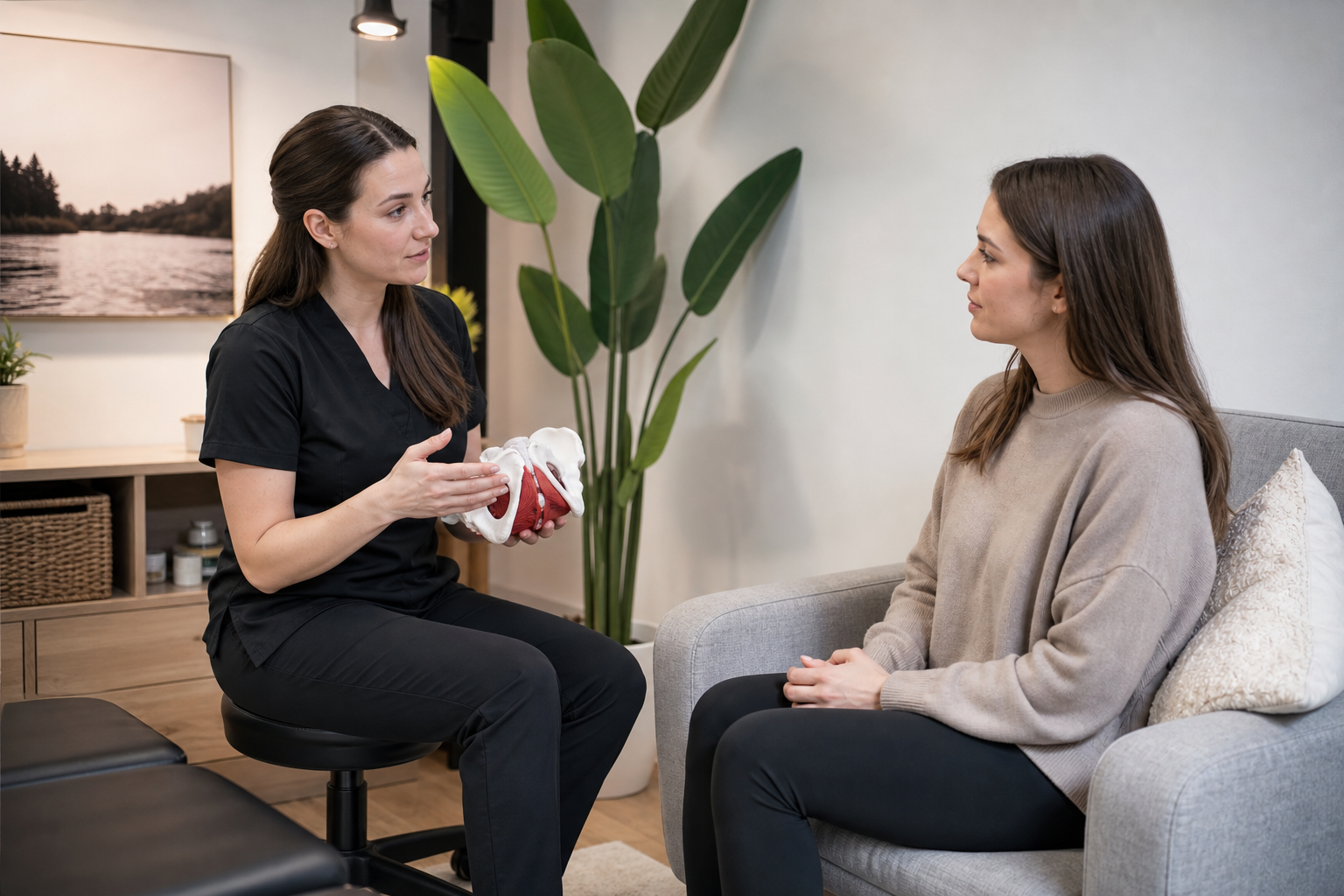
A pelvic floor assessment generally starts with a conversation. You may be asked about symptoms, medical history, surgeries, pregnancy or postpartum experience, activities, and goals. Describing when symptoms occur, what makes them better or worse, and how they affect your routine can make the assessment more useful.
The clinician may then perform a physical assessment to understand pelvic floor function and how it relates to your concerns. Depending on the situation, this may include an external assessment. An internal assessment may also be considered when appropriate, but it is not automatically required for every person or concern.
At Foundation Physiotherapy and Rehab, the process is described as a detailed discussion followed by a physical assessment. If an external or internal assessment is appropriate, the clinic states that it is explained clearly, completed with full consent, and carried out at the patient’s pace.
Ontario law authorizes physiotherapists to assess or rehabilitate pelvic musculature related to incontinence or pain disorders, including specified internal assessment methods. That legal scope does not mean an internal assessment is necessary for you. Its relevance should be explained and agreed upon individually. You can review the applicable Ontario Physiotherapy Act.
5. Ask practical questions about consent and care
You do not need the right medical terminology. These questions can help you understand the assessment and decide whether the approach feels appropriate:
- What will the first assessment involve?
- What are you trying to understand about my symptoms and goals?
- Would an external assessment be enough initially?
- If an internal assessment is considered, why might it be relevant?
- What alternatives are available?
- How will consent be requested, and can I pause or stop?
- What symptoms, activities, or functional changes should I track?
- How will the plan change if an exercise or technique is uncomfortable or unhelpful?
Clear answers matter. A respectful pelvic health assessment should give you time to ask questions, understand your options, and participate in decisions about your care.
6. Compare treatment approaches by the problem being addressed
Pelvic health physiotherapy may use several treatment categories. The appropriate combination depends on the assessment, your symptoms, and your goals.
| Approach | Possible purpose | Question it should answer |
|---|---|---|
| Education | Explain pelvic floor function, symptom patterns, and relevant habits or movement strategies. | Do I understand what may contribute to my symptoms? |
| Muscle retraining | Improve the ability to contract, relax, or coordinate the muscles. | Is the main issue strength, release, timing, or control? |
| Exercise programs | Build appropriate strength, mobility, endurance, or whole-body function. | Which exercises match my capacity and goals? |
| Manual therapy | Address identified movement or soft-tissue concerns. | Would hands-on treatment support an assessment finding? |
| Biofeedback | Provide information that may help adjust muscle activity. | Would feedback improve control or relaxation? |
| Relaxation techniques | Support awareness of release when excessive tension is relevant. | Is difficulty relaxing part of my pattern? |
Foundation’s pelvic health service lists education, manual therapy, pelvic floor muscle retraining, biofeedback, exercise programs, and relaxation techniques among possible treatments. This describes available approaches, not a promise that every option will be used or suit every patient.
7. Choose your next step in London, Ontario
Your next step depends on the pattern and impact of your symptoms. If a short-lived concern is resolving and does not interfere with function, you may observe it and note changes. If symptoms persist, disrupt daily activities, affect confidence or comfort, or remain difficult to interpret, an assessment can provide clearer direction.
Foundation Physiotherapy and Rehab provides pelvic health physiotherapy for women, men, and children in London, Ontario. The clinic is located at Unit 100, 540 Wharncliffe Road South, and describes its care as one-on-one and evidence-based. Prospective patients can request a complimentary 10–15 minute consultation to discuss whether an assessment is appropriate.
Before booking, write down your main symptom, when it occurs, what activities it affects, relevant medical or surgical history, and the outcome you want to work toward.
Frequently asked questions
Does pelvic floor dysfunction always cause incontinence?
No. Concerns may involve bladder or bowel control, pelvic pain, difficulty relaxing or coordinating muscles, sexual-function concerns, pelvic organ support, or symptoms after pregnancy, childbirth, surgery, or cancer treatment. Incontinence is one possible pattern, not a requirement.
Can men and children receive pelvic health physiotherapy?
Yes. Foundation’s pelvic health service states that it provides specialized care for women, men, and children. The appropriate plan depends on the person’s symptoms, history, goals, and ability to participate.
Is an internal pelvic floor assessment always required?
No. An internal assessment is not automatically necessary. An external assessment or clinical discussion may be appropriate. If an internal assessment is considered, ask why it may help, what alternatives exist, and how consent and stopping will be handled.
Should I start pelvic floor exercises before being assessed?
Not automatically. Exercises may help some patterns, but symptoms can also involve excessive tension or poor coordination. If the underlying issue is unclear, assessment can help determine whether strengthening, relaxation, retraining, or another approach is appropriate.
Conclusion: Start with understanding, not assumptions
A pelvic floor dysfunction overview is most useful when it changes the first question from “How do I strengthen these muscles?” to “What may be happening, and how can I understand it safely?” Weakness, tension, and coordination problems can present differently, so symptoms alone cannot determine treatment.
For persistent or disruptive symptoms, look for an assessment that begins with your history, explains the examination, respects consent, and connects treatment to your goals. In London, Ontario, Foundation Physiotherapy and Rehab offers a complimentary 10–15 minute consultation for prospective pelvic health physiotherapy patients.