
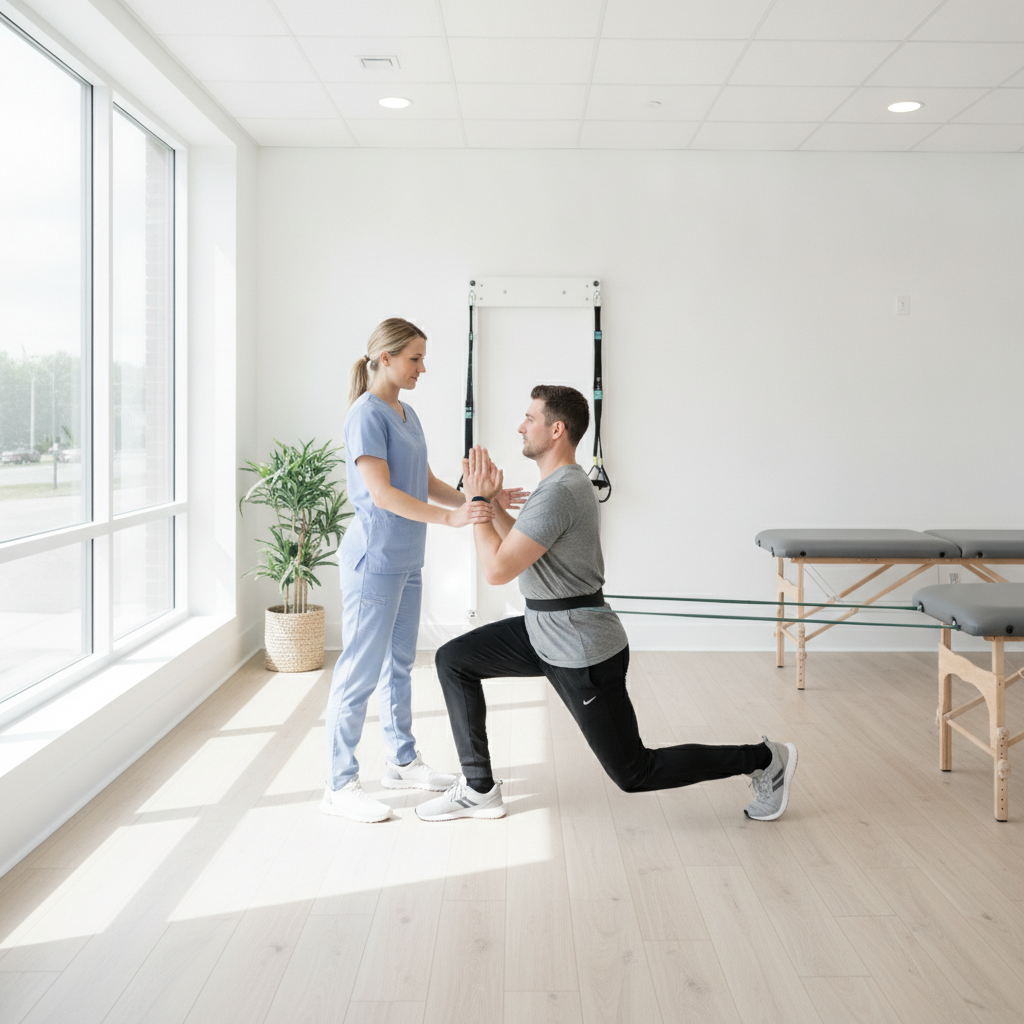
Physiotherapy London Ontario Guide: Avoid These 5 Mistakes
Physiotherapy is evidence-based care that restores movement, reduces pain, and improves function. This physiotherapy London Ontario guide helps you quickly match your symptoms to the right specialty stream—pelvic health, vestibular, concussion, TMJ, pedorthics, or general orthopedic—so you start with a plan that fits your life.
By Foundation Physiotherapy & Rehab • Last updated: 2026-07-12
| Care model | 100% one-on-one sessions |
|---|---|
| New patient consult | Complimentary 10–15 minute phone/virtual guidance |
| Specialties | Pelvic health, vestibular, concussion, TMJ, pedorthics, B-Pulse |
| Booking | Online scheduling via JaneApp |
| Service area | London |
| Clinic leadership | Led by physiotherapist and clinic director Nirali Mehta |
Local tip for London residents
Late-afternoon and early-evening slots across London fill fast as school and work end. If you can, book mid-morning or early afternoon for quicker access and a calmer visit. Same-week availability is often best through online scheduling.
Overview
This guide shows how physiotherapy works in London, why specialty streams matter, and how to book the right one on your first try. You’ll see clear examples for pelvic health, vestibular, concussion, TMJ, pedorthics, and orthopedic care—delivered one-on-one at Foundation Physiotherapy & Rehab.
If you’re reading this at 11 p.m. with a throbbing back or you’ve been leaking since your second baby, you want relief and a plan. London has many clinics, but few combine pelvic health, vestibular rehab, concussion recovery, TMJ care, pedorthics, and B-Pulse therapy in one location. That breadth helps when issues overlap—like neck-related dizziness plus jaw tension—so you don’t repeat your story at multiple clinics.
What Physiotherapy in London Ontario Actually Covers (and What Most Clinics Skip)
Physiotherapy restores movement, reduces pain, and improves function through assessment, manual therapy, tailored exercise, and education. In London, general orthopedic care is common; coordinated pelvic health, vestibular, concussion, TMJ, and pedorthic services under one roof are harder to find—and often the difference-maker.
Core areas most people need
- Orthopedic & musculoskeletal: sprains, tendon pain, post-surgical rehab, back/neck pain. Explore our orthopedic physiotherapy.
- Manual therapy + exercise: hands-on joint and soft-tissue work paired with progressive strength and movement coaching.
- Education & load management: pacing, return-to-sport/work planning, ergonomic tweaks you can apply this week.
Specialty areas many clinics don’t offer in-house
- Pelvic health physiotherapy: incontinence, pelvic pain, prenatal/postnatal recovery—see pelvic health care.
- Vestibular rehabilitation: dizziness, BPPV, imbalance—details at vestibular rehab.
- Concussion rehabilitation: staged exertion and vestibular-ocular work to return safely to school, sport, or work.
- TMJ physiotherapy: jaw pain, clicking, and headaches treated through jaw and neck assessment plus exercise.
- Pedorthic services: custom orthotics, bracing, and compression stockings integrated with your rehab plan.
- B-Pulse neuromuscular stimulation: non-invasive pelvic floor and neuromuscular support via B-Pulse chair therapy.
Want a general primer on vertigo and balance rehab? This outside overview of vestibular physiotherapy concepts explains repositioning and balance training in plain language.
The 5 Mistakes London Patients Make With Physiotherapy (and What to Do Instead)
Avoid booking a generic slot for a specialty problem, compressing your assessment, relying on passive-only care, showing up without key gear, and waiting months to get help. Choose the right stream, expect a thorough exam, and pair hands-on care with targeted strength.
- Booking the first “available now” slot for a specialty issue. If you’re spinning when you roll in bed, you likely need vestibular care—not a general back-and-shoulder session. Picking the right stream saves weeks. Our complimentary 10–15 minute consult helps you choose correctly.
- Accepting a compressed assessment. A rushed intake can miss drivers like BPPV crystals or pelvic floor tension. “In my experience, patients feel better—and progress faster—when we slow down enough to find the true driver on day one,” says clinic director Nirali Mehta. Expect a full history, movement screen, and specialty testing when indicated.
- Chasing passive care only. Lying under heat for the fourth week while pain keeps bouncing back is frustrating. Relief techniques (like manual therapy or dry needling) are useful, but change lasts when you add precise, progressive exercise. That’s the core of functional rehab.
- Arriving without the gear your body actually uses. For pedorthic or lower-body pain, bring your work shoes and runners. For jaw pain, bring your mouthguard if you use one. Real-life equipment lets us test what matters and tailor advice to London routines—work commutes, weekend skates, and everything in between.
- Waiting months to ask for specialty help. Pelvic leaks, jaw clenching, or dizziness rarely “just go away.” Early pelvic, TMJ, or vestibular guidance often shortens the path back to normal life. Start with the brief consult if you’re unsure which door to open.
How to Match Your Condition to the Right Type of Physiotherapy
Choose your stream by your main symptom: pelvic health for leakage or pelvic pain; vestibular for dizziness and BPPV; concussion rehab for post-impact symptoms; TMJ care for jaw pain and headaches; pedorthics for foot mechanics; orthopedic for sprains and post-surgical recovery.
Symptom-to-service map
- Leaking, pelvic pain, prenatal/postnatal: Pelvic Health Physiotherapy (education, behavior strategies, graded exercise; internal/external techniques when indicated).
- Room spinning with bed turns, imbalance: Vestibular Rehabilitation (can include canalith repositioning plus gaze/balance training).
- Headache, fog, light/noise sensitivity after impact: Concussion Rehabilitation (graded exertion, vestibular-ocular work, return-to-learn/work planning).
- Jaw pain, clicking, morning headaches: Explore jaw pain self care tips and book TMJ-focused physiotherapy.
- Foot, knee, hip overload or recurrent strain: Pedorthic services (custom orthotics, bracing, compression) aligned to your rehab stage, not just foot shape.
- Sprains, tendon pain, post-op, back/neck: Orthopedic & Musculoskeletal Physiotherapy (manual therapy plus progressive loading).
If symptoms cross categories, choose the most obvious driver. Dizziness triggered by bed turns often points to BPPV (vestibular), not general neck tightness. When in doubt, the 10–15 minute consult will steer you.
Specialized Services Unique to Foundation Physiotherapy and Rehab
Foundation unites pelvic health, vestibular, concussion, TMJ, pedorthics, functional rehab, acupuncture/dry needling, and B-Pulse therapy—delivered one-on-one. Coordinated streams reduce referrals and keep your plan moving without restarts.
Pelvic Health Physiotherapy: Care for incontinence, pelvic pain, and prenatal/postnatal recovery. Sessions are private, paced to your comfort, and pair education with gentle techniques and progressive exercises you can actually fit into your day.
Vestibular Rehabilitation: Assessment for BPPV and other vestibular disorders. Repositioning maneuvers plus balance and gaze training are tailored to your triggers. For objective insight, we use tools described in our London program on dizziness assessments with infrared goggles.
Concussion Rehabilitation: A staged, symptom-guided plan that safely advances your activity. Expect clarity on pacing, exertion, and how vestibular-ocular work fits your return to school, work, or sport.
TMJ Physiotherapy: Jaw and neck are assessed together. We combine manual therapy with relaxation strategies and progressive exercise so you can chew, talk, and sleep more comfortably.
Pedorthic Services: A pedorthic assessment looks past foot scans. We watch your gait, check how arches behave under load, and time orthotic or bracing choices to your current rehab phase—so devices support progress, not replace it.
Functional Rehabilitation: We train real life: floor-to-stand, stairs, lifts, carries, and confident walking. That’s how strength turns into daily freedom.
Acupuncture & Dry Needling: Selected cases benefit from targeted neuromuscular input for pain and tone modulation. It’s always paired with movement to lock in gains.
B-Pulse Chair Therapy: You sit clothed on a padded seat as gentle, rhythmic contractions cue pelvic floor and neuromuscular activation. Sessions are short and non-invasive, and they complement active rehab—not replace it.
Not sure where to start? Book a complimentary 10–15 minute consultation. We’ll listen, narrow the likely driver, and point you to the right specialty stream—no pressure, just clarity.

What to Expect at Your First Appointment in London Ontario
You’ll complete a detailed history, movement and specialty testing (as needed), then start with a clear plan that blends hands-on care and targeted exercises. You’ll leave knowing what to do this week and how progress will be measured.
- History and goals: What happened, symptom behavior, red flags, and your goals—work, family, or sport.
- Assessment: Posture, strength, mobility, and specialty tests (pelvic, vestibular, TMJ, or concussion when indicated). See how we analyze dizziness with objective tools in our vestibular program.
- Treatment start: Manual therapy, education, and 2–4 precise exercises you can perform confidently at home.
- Plan and timeline: Milestones, re-test points, and when to layer walking, running, lifting, or sport without flares.
Local considerations for London
- After-school and post-work times are busiest citywide; mid-morning often books faster.
- Winter weather can extend travel time; build a small buffer so you arrive relaxed.
- Bring the footwear you actually use around London—work shoes, skates, or runners—so pedorthic and movement advice is practical.

How Foundation Compares to Other London Ontario Physiotherapy Clinics
Compared with large chains and single-focus studios, Foundation offers coordinated specialty streams—pelvic health, vestibular, concussion, TMJ, pedorthics, functional rehab, and B-Pulse—delivered one-on-one. This reduces referrals and helps people with overlapping issues progress without starting over elsewhere.
| Aspect | Foundation Physiotherapy & Rehab | Large chains | Niche studios |
|---|---|---|---|
| Care model | 100% one-on-one | Often mixed one-on-one + supervised area | One-on-one |
| Specialty breadth | Pelvic, vestibular, concussion, TMJ, pedorthics, functional rehab, B-Pulse | Varies by site; often refer out | Deep but limited scope |
| Coordinated planning | In-house collaboration across streams | Depends on location/staff | Good inside scope; external for others |
For general rehab insights outside our city, you can browse a plain-language sports injury rehab walkthrough or skim brief case-style stories. In London, our edge is specialty breadth under one roof and a complimentary consult that points you to the best-fit stream on day one.
Key Takeaways
Match your main symptom to the right specialty, expect a thorough assessment, and pair hands-on care with targeted exercise. Coordinated specialty services under one roof reduce referrals and keep your plan moving without delays.
- Use this physiotherapy London Ontario guide to pick the correct stream the first time.
- Specialty care matters for pelvic health, vestibular, concussion, TMJ, and foot mechanics.
- One-on-one sessions plus a precise home plan drive lasting change.
- Foundation coordinates overlapping issues without bouncing you between clinics.
Ready to start? Book your complimentary 10–15 minute consultation. We’ll help you choose the right appointment and get your first week of actions lined up.
Frequently Asked Questions About Physiotherapy in London Ontario
London patients often ask about access, session flow, and how specialty care differs from general physio. These concise answers help you book with confidence and make steady progress between visits.
Do I need a doctor’s referral to see a physiotherapist?
No. You can book directly in Ontario. Some extended health plans may request a physician note for reimbursement, but you don’t need one to begin care. Direct access speeds assessment and treatment.
What’s the difference between vestibular therapy and regular physio?
Vestibular therapy targets the inner ear and balance system. It uses repositioning maneuvers for BPPV and gaze/balance exercises for dizziness and motion sensitivity. It’s a specialized stream beyond general joint or muscle rehab.
Can TMJ-related jaw pain cause headaches?
Yes. Jaw mechanics and neck tension often contribute to headache patterns. TMJ physiotherapy assesses both areas and pairs manual therapy with relaxation and targeted exercise to reduce pain and improve function.
What’s included in the complimentary consultation?
A brief call or virtual chat to understand your main concern, rule out urgent issues, and recommend the best-fit specialty stream. You’ll leave with clear next steps and a suggested first appointment—no pressure.