
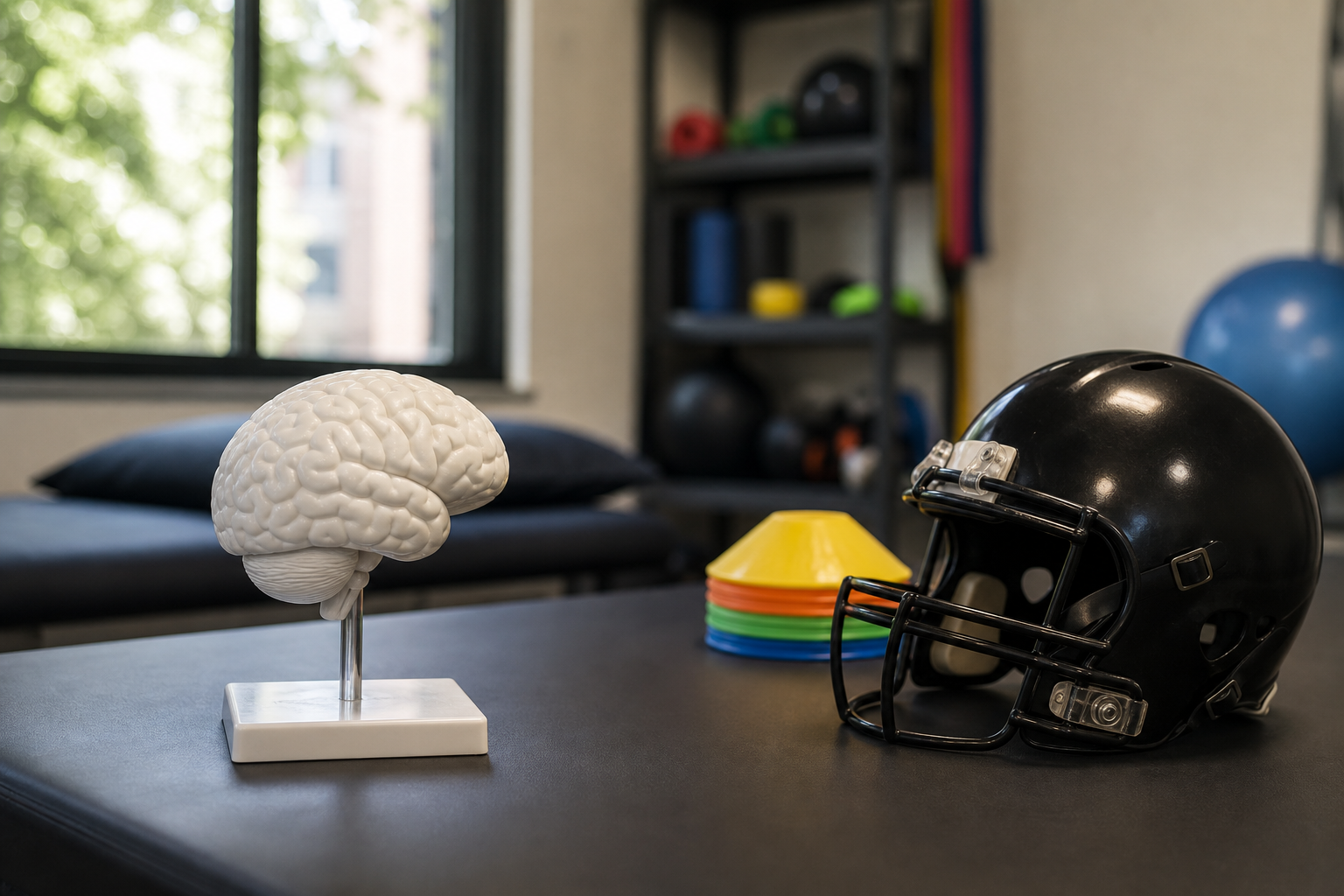
A Practical Guide to Concussion Rehab for Teens

A Practical Guide to Concussion Rehab for Teens
Concussions can be confusing and stressful, especially when they impact a teen’s school, sports, and social life. This guide offers a practical, step-by-step framework to help families navigate concussion rehab for teens with confidence. It covers what to do early on, how to pace activity, ways to return to learning and sport safely, and how parents can support recovery day to day.
Important limitation: The information below is educational and not a diagnosis, treatment plan, or a substitute for personalized medical advice. If you suspect a concussion—or if symptoms worsen—seek assessment from a qualified healthcare professional.
Key Takeaways
- Concussion recovery for teens involves a structured, symptom-guided approach to gradually return to daily activities.
- Early management focuses on “relative rest” and symptom monitoring, rather than strict bed rest.
- School accommodations are crucial for supporting cognitive demands during recovery.
- Parents play a vital role in maintaining a supportive environment and encouraging gradual activity increases.
- Consult healthcare professionals for tailored recovery plans and when to seek urgent care.
What is a concussion in teens?
A concussion is a mild traumatic brain injury caused by a hit to the head or body that transmits force to the brain. It can disrupt how the brain functions for a short period and may lead to symptoms such as headache, dizziness, sensitivity to light or noise, trouble concentrating, fogginess, sleep changes, mood shifts, or balance problems. Most concussions do not show up on standard imaging, which is why symptom tracking and guided activity are central to rehab.
Teen recovery needs special attention because school demands, evolving sleep patterns, growth, and competitive sports can all influence symptoms. The goal of concussion rehab is to support the brain as it recovers by balancing rest and activity, gradually rebuilding tolerance to schoolwork, exercise, and daily life while avoiding symptom spikes.
First 48 hours: what to do
The first 24–48 hours set the tone for recovery. Think “relative rest,” not strict bed rest. That means reducing cognitive and physical stress while keeping normal routines calm and simple.
- Prioritize sleep and hydration; maintain regular meals.
- Limit intense screen time (gaming, high-action videos) if it increases symptoms; use short, quiet intervals instead.
- Avoid risky activities (contact sports, heavy lifting, cycling on roads, skateboard tricks) and anything that risks another head impact.
- Use simple symptom management: dim lights if sensitive, take brief breaks in a quiet room, and avoid loud environments early on.
- Notify school and coach so short-term adjustments can begin quickly.
If there was a loss of consciousness, worsening headache, repeated vomiting, seizures, weakness or numbness, slurred speech, significant neck pain, or any concerning change in behavior, seek urgent medical evaluation.
Symptom-guided recovery milestones
Concussion rehab for teens works best when progress is guided by symptoms. A simple framework many families find useful is to build activity in stages. Move forward when symptoms are mild and stable; pause or step back if symptoms rise significantly during or after activity.
- Calm stabilization (Days 1–3): Short, quiet activities at home; gentle walks around the house or yard as tolerated; brief reading or light screens only if symptoms allow.
- Light routine (Days 2–5): Add short walks outside; 5–15 minutes of light aerobic movement (easy stationary cycling or gentle walk) staying below symptom threshold; simple cognitive tasks for a few minutes at a time.
- Build tolerance (Days 4–10): Expand light exercise to 20–30 minutes at a comfortable pace; increase school-related reading and note review in chunks; begin structured breaks every 20–30 minutes.
- Return-to-learn full days (variable): Attend more classes with supports (see roadmap below). Keep exercise sub-symptom and add light strengthening or balance practice as advised by a clinician.
- Sport-specific non-contact (once school days are tolerated): Introduce non-contact drills, controlled movement patterns, and progressive conditioning. No contact or scrimmage yet.
- Full practice and contact (final step): Only after prior steps are symptom-stable and medical clearance is obtained according to your team’s policies. Full competition follows successful, symptom-free practices.
Tip: Keep a short daily log. Note sleep, school time, exercise time, and peak symptoms (0–10). Trends over days are more meaningful than a single spike.
Return-to-learn roadmap
School places cognitive demands on memory, attention, reading, screens, and noise tolerance. A stepwise approach helps teens keep momentum without overloading the brain.
- Home-based learning warm-up: 15–30 minute sessions of light reading, flashcards, or worksheets with breaks. Stop before symptoms climb.
- Partial school days: Start with 1–3 classes or a half-day. Use quiet spaces between classes, wear a hat or tinted lenses if light triggers symptoms, and plan rest periods.
- Modified full days: Attend full days with supports like reduced homework, extra time on tests, pre-printed notes, or postponed high-stakes exams.
- Full academic load: Gradually remove accommodations once the teen completes typical workloads without symptom escalation during and after school.
Helpful school accommodations may include:
- Shortened assignments or alternate formats (oral responses, typed notes).
- Extra time for tests and classwork; quiet testing rooms.
- Scheduled rest breaks; permission to step out to a calm area.
- Reduced screen brightness, seating away from bright lights or speakers.
- Staggered return to extracurriculars and crowded assemblies.
Coordinate with school counselors, teachers, and coaches so expectations are clear. Many teens benefit from a simple one-page plan listing triggers, supports, and when to reassess.
Return-to-sport checklist
Returning to sport is more than “feeling okay.” A structured progression reduces the chance of setbacks. Use this practical checklist and work with your healthcare provider and coach.
- Can complete a full school day with typical workload and stable symptoms.
- Can perform 20–30 minutes of steady aerobic exercise below symptom threshold, followed by 24 hours without symptom spikes.
- No dizziness or headache increase with head turns, quick stops/starts, or direction changes during light drills.
- Balance and coordination feel normal during non-contact sport-specific movements.
- Progressed from light conditioning to controlled, non-contact drills without symptom return the next day.
- Medical clearance obtained per team or league requirements before contact practice or competition.
If symptoms return at any step, pause, rest, and resume at the prior successful level after 24 symptom-stable hours.
Managing common symptoms
Symptoms often improve in clusters. Track which activities aggravate each cluster and apply targeted strategies.
- Headache and light/noise sensitivity: Lower screen brightness, use blue-light filters, study in well-lit but non-glary spaces, and build up exposure time gradually.
- Dizziness and balance issues: Move slowly when changing positions; start with steady walking before quick turns; increase complexity (e.g., head turns while walking) under guidance.
- Brain fog and focus problems: Use short work blocks (20–30 minutes) with 5-minute breaks; prioritize single-tasking; keep to-do lists simple and visible.
- Sleep disruption: Keep regular bed and wake times; limit late-evening screens; use a calming pre-sleep routine (stretching, reading, or breathing exercises).
- Mood changes (irritability, anxiety, low mood): Normalize feelings; keep social connection in low-stimulus settings; add light daily exercise which often helps mood regulation.
Note: If mood symptoms persist or intensify, involve a mental health professional experienced with youth.
Red flags and when to seek care
Seek urgent medical attention if any of the following occur after a suspected concussion:
- Worsening or severe headache not relieved with rest.
- Repeated vomiting, seizures, or fainting.
- Weakness, numbness, neck pain, or coordination problems.
- Slurred speech, unusual behavior, confusion that is getting worse, or difficulty waking.
- Unequal pupils or vision loss.
For non-urgent but persistent symptoms—such as ongoing dizziness, trouble concentrating at school, or exercise intolerance—book a follow-up with a clinician who manages concussions in youth.
Building a support team
Recovery is smoother when home, school, and sport are aligned. Consider involving:
- Primary care clinician: Initial assessment, monitoring, clearance decisions, and referrals.
- Rehabilitation professional: Guides graded exercise, vestibular and balance progressions, and activity pacing.
- School staff: Implement accommodations and monitor classroom tolerance.
- Coach/trainer: Oversees athletic progression and practice modifications.
- Mental health professional: Supports mood, anxiety, and coping skills if needed.
Bring a concise symptom log and a list of questions to each appointment to keep decisions clear and collaborative.
How parents can help
Parents play a pivotal role in keeping recovery on track without over-policing. Aim for calm structure, consistent routines, and small daily wins.
- Set a daily rhythm: wake time, school blocks, exercise, social time, and bedtime.
- Use the “15% rule”: when increasing activity, raise duration or intensity by no more than ~10–15% at a time.
- Coach pacing: encourage breaks before a symptom spike, not after.
- Celebrate progress: note what went better this week versus last week.
- Keep perspective: minor ups and downs are normal; look for steady weekly trends.
If conflict arises around screens, academics, or return-to-play, agree on a written plan with clear checkpoints and who decides each step.
Questions to ask your provider
- Which symptoms are most important to track for my teen, and how often?
- Are vestibular or balance exercises appropriate, and who should guide them?
Sample daily plan (adjust to symptoms)
Every teen is different. Use this as a template and modify based on tolerance.
- Morning: Wake at a consistent time; hydration and breakfast; 20–30 minutes of schoolwork; 5-minute quiet break; short walk.
- Midday: 20–30 minutes of reading or assignments; lunch; 15–25 minutes of light aerobic exercise below symptom threshold; stretch/cooldown.
- Afternoon: Classes or school blocks with scheduled breaks; short social check-in with a friend in a calm setting.
- Evening: Light chores; free time with low-stimulus activities; screen use in moderation; calming routine; consistent bedtime.
FAQ
How long does concussion recovery take for teens?
Recovery timelines vary. Many teens improve meaningfully within days to a few weeks, but some need longer, especially when school or sport loads are high or symptoms are complex. Focus on steady weekly progress, not a fixed deadline, and work with your clinician to tailor pacing.
Should teens completely avoid screens after a concussion?
Strict screen bans are rarely necessary for long. Early on, limit intense or fast-paced screen use if it worsens symptoms, and reintroduce short, low-stimulus sessions as tolerated. Adjust brightness, use larger fonts, and take frequent breaks.
When is it safe to exercise again?
Light, sub-symptom aerobic activity is often appropriate within the first few days, provided it does not worsen symptoms during or in the 24 hours after. Start with gentle walks or easy stationary cycling and increase gradually under guidance.
Do symptoms have to be completely gone before returning to school full-time?
Not necessarily. Many teens attend full school days with accommodations while symptoms are still improving. The key is ensuring the academic load does not cause significant symptom escalation during the day or the following morning.
What if symptoms plateau?
Plateaus are common. Revisit sleep, hydration, and pacing. Consider whether specific triggers—visual tasks, rapid head movements, busy environments—need targeted strategies. Discuss next steps with a qualified clinician, who may recommend focused rehab approaches.