
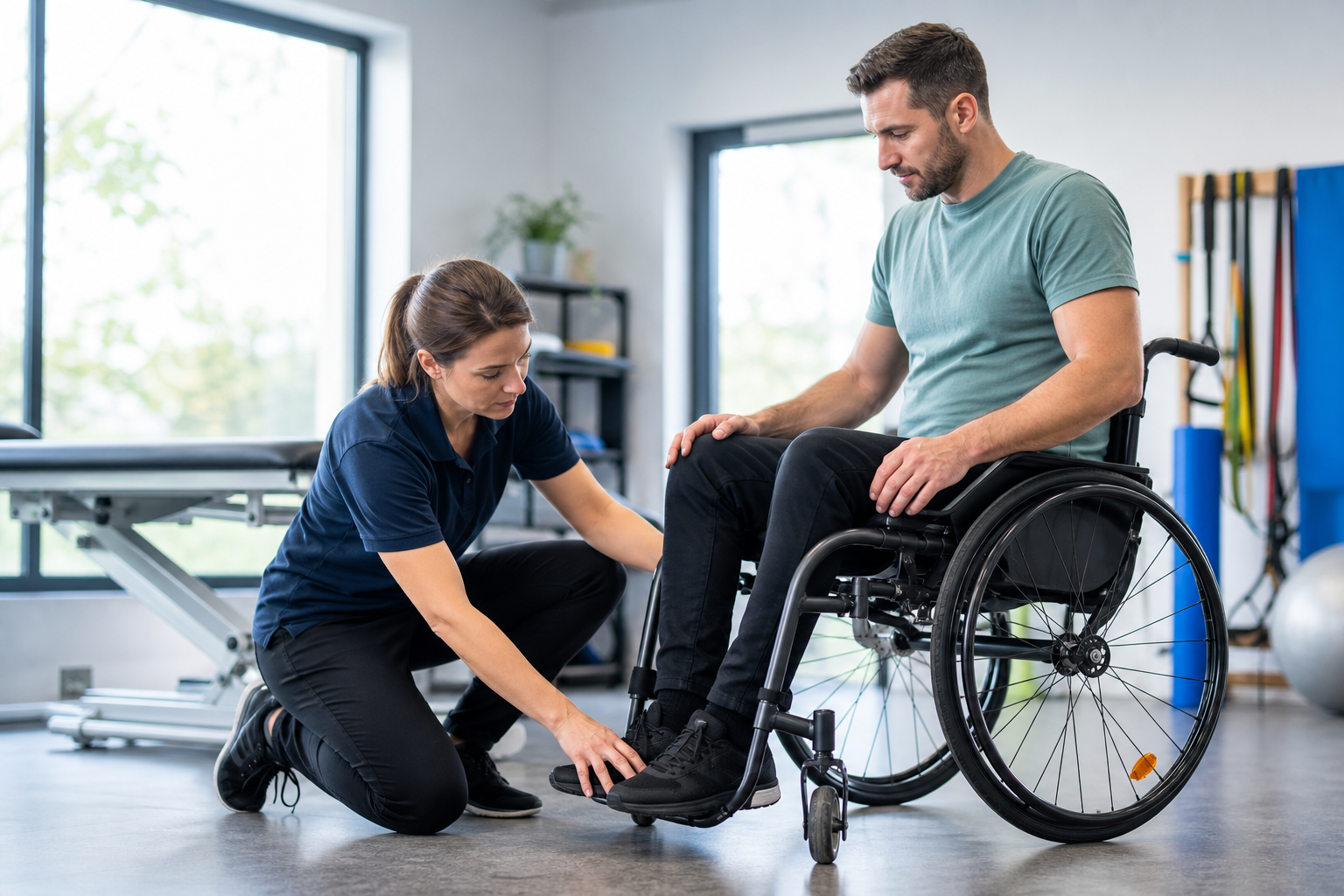
What happens during the wheelchair assessment process?
When mobility changes, the wheelchair assessment process helps match a person’s body, routines, and environment to the right seating and mobility solution. This article walks through each stage you can expect in London, Ontario: who performs the work, how to prepare for an appointment, how the Assistive Devices Program (ADP) fits in, and what happens after a chair is ordered and delivered. It also offers a practical checklist and questions to bring to your visit. For related first-party details, review mobility assessment checklist safe independence right device fit.
Who is involved and who performs the assessment
A wheelchair assessment usually brings together three distinct roles. The assessor is an occupational therapist or physiotherapist who evaluates functional needs and completes clinical documentation. The vendor supplies and fits equipment, and the ADP authorizer or assessor confirms eligibility and completes paperwork for public funding. For an overview of assessor responsibilities and ADP interactions see the provincial guidance for health care professionals on the Assistive Devices Program.
Private clinics such as Foundation Physiotherapy & Rehab provide one-on-one mobility assessments and ADP-authorized guidance in an appointment-based setting. That can be helpful if you prefer a private appointment, want extended functional testing, or need focused time to trial seating options before vendor selection. For clinic preparation resources see the mobility assessment checklist available from the clinic.
Stage 1: referral and eligibility check
The process often starts with a referral from a primary care provider, a specialist, a community agency, or by contacting a clinic directly. At intake the assessor confirms whether a long-term mobility need and medical history meet ADP eligibility rules and whether additional documentation from a physician or specialist is required. The provincial ADP guidance explains the assessor’s role in confirming eligibility and preparing the required application material for funded devices.
What you should expect at this stage
- Intake questions about diagnosis, daily mobility tasks, and current equipment.
- Requests for medical records or a physician statement when required by ADP.
- Scheduling of an in-clinic assessment if the case appears appropriate for a mobility device.
- A preliminary discussion of funding options, including ADP, private purchase, or charity supports.
Stage 2: preparing for the appointment — what to bring
Good preparation shortens the assessment and improves the likelihood of selecting the right device. Bring any relevant medical reports, your current mobility aids, footwear you normally use, and examples of daily tasks that are difficult such as transfers, community travel, toileting, and dressing. Notes about the surfaces you encounter at home, vehicle travel, and who helps you with care are also useful.
Practical items to bring
- Photo identification and health card for ADP paperwork if applicable.
- Medical reports, recent imaging, or specialist letters that describe your condition.
- Your current wheelchair, cushion, walker, cane, or orthotics so the assessor can compare function.
- Typical shoes and clothing you will wear while using the wheelchair.
- Someone who assists you if transfers or communication support are needed.
Foundation Physiotherapy & Rehab provides a printable mobility assessment checklist to make this stage efficient and accurate. Preparing photos or brief notes about home entrances, bathroom dimensions, and vehicle type can speed vendor selection later in the process.
Stage 3: in-clinic assessment and seating evaluation

The in-clinic assessment is the detailed clinical stage. Expect a review of medical history, observation of transfers and mobility tasks, static postural assessment, and dynamic testing while seated and during transfers. The assessor will take anthropometric measurements and check skin integrity, range of motion, and postural support needs. If trial seating or cushions are available, you may spend time in different wheelchair types to evaluate comfort and pressure distribution.
Assessors use standard seating assessment practices to match functional needs with device features. Key clinical observations that guide equipment choice include:
- Ability to perform safe transfers and the level of caregiver assistance required.
- Postural asymmetry or fixed deformities that require specialised seating components.
- Skin risk and the need for pressure redistribution cushions or a seating surface designed to reduce ulcer risk.
- Functional reach, upper limb control, and the typical environment where the chair will be used.
Where trial seating is possible, spending time in a proposed chair often answers practical questions about posture, comfort, and access to controls before an order is placed. If trials are limited, the assessor will document clinical rationale and recommended features to reduce the risk of poor fit.
Stage 4: documentation, ADP application, and funding steps
If ADP funding is being sought, the assessor completes clinical justification and the application documents that ADP requires. The provincial guidance clarifies that the assessor leads the assessment, confirms the applicant’s eligibility, and ensures the application form is completed correctly. For many mobility devices ADP pays up to 75 percent of the approved price of equipment. The assessor and vendor typically coordinate the application and pricing details with the client and ADP.
What this means for you
- The assessor documents clinical need and functional goals on ADP forms and any supplementary reports.
- The vendor may prepare a recommended product and price quote to attach to the application.
- ADP review and approval are administrative steps carried out by government staff, so the assessor and vendor provide evidence and supporting detail rather than deciding funding outcomes.
- Keep copies of all documentation provided to ADP and your assessor for your records.
Stage 5: vendor selection, ordering, delivery and follow-up
Once ADP approval and funding are confirmed or if you are self-funding, a vendor is selected to build or supply the wheelchair. Vendors often work directly with the client and the assessor to finalise components, seating systems, and drive controls. Delivery includes an initial fitting and education for the user and caregivers. Expect follow-up adjustments after you try the chair in daily life; these fine-tuning visits address pressure points, posture, and functional control.
Typical post-delivery steps
- Initial on-site fitting to confirm measurements and set cushion or backrest tension.
- User and caregiver training on transfers, safe operation, and basic maintenance.
- One or more adjustment visits within weeks of delivery to refine seating and pressure distribution.
- Longer term reviews periodically if health, weight, or functional needs change.
Assessors typically remain available for documentation updates and post-delivery adjustments as needs evolve. If the chair continues to cause skin problems or functional barriers, request a re-evaluation to consider alternative seating solutions.
Decision checklist: clinic assessment or hospital seating program

Choosing between a hospital program and a private clinic assessment depends on priorities rather than a single right answer. Consider the following factors.
- Depth of one-on-one time Private clinics often offer focused, appointment-based, one-on-one assessments if you want extended testing and personalised time. Foundation Physiotherapy & Rehab offers one-on-one assessments and a complimentary 10 to 15 minute consultation to discuss suitability.
- Multidisciplinary resources Hospital seating programs may provide larger multidisciplinary teams and access to very specialised seating resources in the same service, which can be important for highly complex cases.
- Funding and vendor options Both settings can support ADP applications, but vendor relationships and trial inventories will vary by program.
- Scheduling and access Wait times and scheduling flexibility differ by service. Ask about typical timelines at intake rather than assuming one is faster.
Questions to ask your assessor and common objections answered
Bring these questions to your appointment to keep the conversation focused on outcomes.
- What specific functional problems are we trying to solve with this chair?
- Which seating features are essential, and which are optional?
- How will this device affect transfers, vehicle travel, and home access?
- What follow-up and adjustment visits are included or recommended?
- How will you support the ADP application, and what documentation will I receive?
Common concerns
- Will ADP approve my application? ADP approval depends on clinical documentation and program criteria. The assessor prepares the application and supporting justification. For details on the assessor’s role and funding steps refer to the provincial ADP guidance for health care professionals.
- What if the chair is uncomfortable? Initial discomfort should be addressed through post-delivery adjustments. Expect at least one follow-up fitting and work with the vendor and assessor to adjust the cushion, back support, or footrests.
- Can I get an assessment at a private clinic and still use ADP? Yes. Private assessors who are ADP-authorized can complete the required documentation for ADP applications. Coordinate with your assessor and vendor early in the process.
How Foundation Physiotherapy & Rehab can support your assessment and next steps
Foundation Physiotherapy & Rehab provides one-on-one mobility assessments, ADP-authorized guidance, and related services such as pedorthic evaluation and custom orthotics that commonly appear during mobility planning. The clinic offers a complimentary 10 to 15 minute consultation to review eligibility and clarify next steps before you book a full assessment. For a printable appointment checklist and preparation tips, consult the clinic’s mobility assessment checklist.
Frequently asked questions
How long does a wheelchair assessment appointment take?
Assessment length varies with complexity. A straightforward seating assessment may take under an hour, while complex cases with trials, measurements, and caregiver training can take longer. Your assessor will advise on expected appointment time at booking.
Does ADP cover the cost of my wheelchair and the assessment in Ontario?
ADP provides consumer centred funding support for eligible residents with long term physical disabilities and may pay up to 75 percent of the approved price for many mobility devices. The assessor confirms eligibility and completes the necessary application forms, but ADP makes the final funding decision. See provincial ADP guidance for full details.
Can I use ADP funding if I get an assessment at a private clinic?
Yes. Assessors in private clinics who follow ADP requirements can complete the clinical documentation and application materials needed for ADP review. Coordinate with your assessor and chosen vendor to prepare the required paperwork.
What happens if my wheelchair is uncomfortable after delivery?
Initial discomfort is common while adapting to a new device. Your vendor and assessor should provide follow-up adjustments and training. If problems persist, request a follow-up appointment to re-evaluate seating, cushion selection, and posture support.
Who can refer me for a wheelchair assessment?
Referrals can come from primary care providers, specialists, community agencies, or you can contact a clinic directly. If ADP funding is being sought, the assessor will confirm any specific referral documentation required for the application.
Ready to discuss whether a mobility assessment is right for you? Book a complimentary 10 to 15 minute consultation with Foundation Physiotherapy & Rehab to review eligibility, learn how the wheelchair assessment process applies to your situation, and access ADP-authorized guidance.
Foundation Physiotherapy and Rehab
Reference: Assistive Devices Program for health care professionals, Government of Ontario: assistive devices program health care professionals