
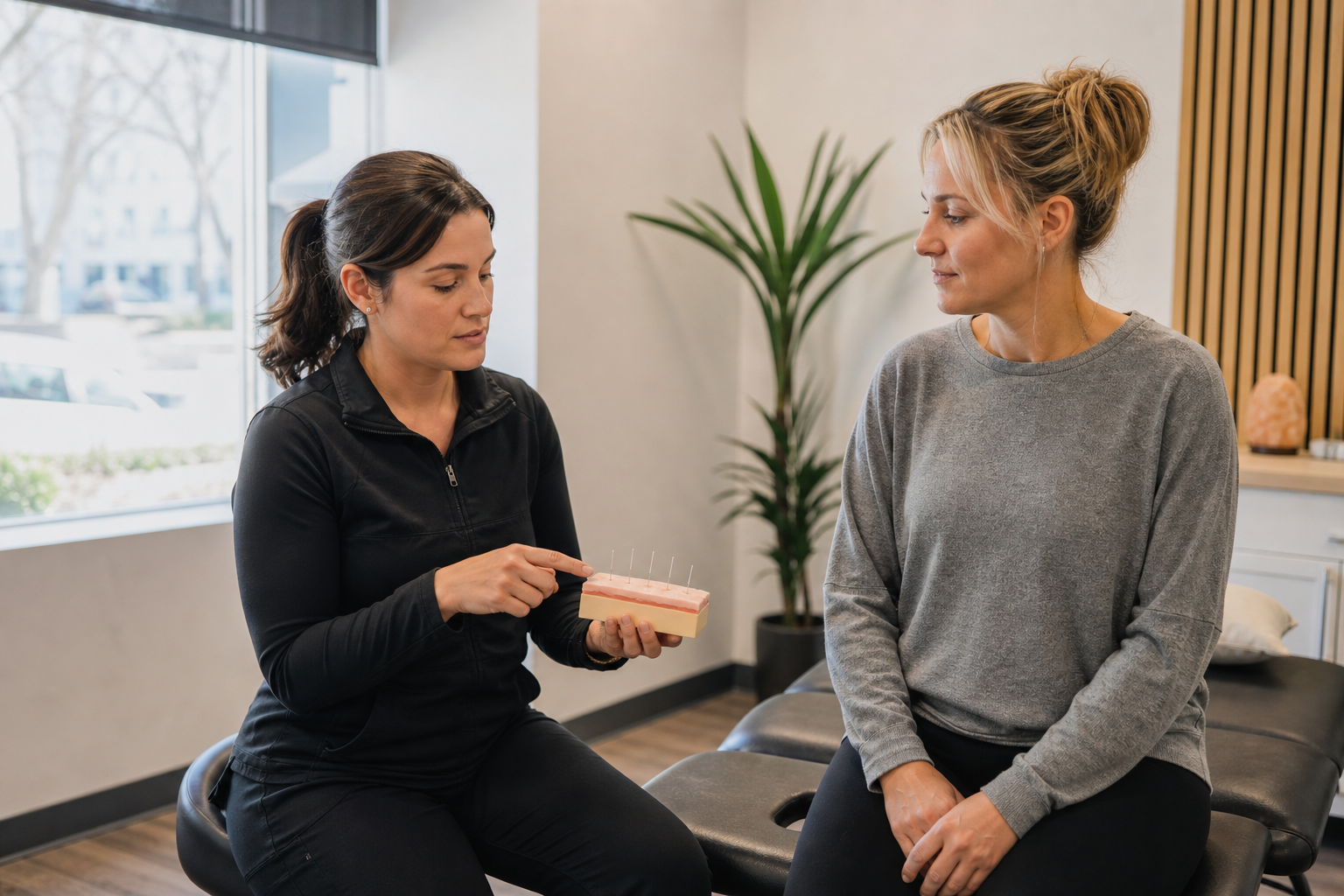
Acupuncture & Dry Needling: Which Approach Fits You?
Acupuncture and dry needling are not automatically interchangeable choices. The more appropriate option depends on what you want to improve, your symptoms and movement concerns, your health history, and the findings of an individualized assessment. A physiotherapist can help connect the treatment discussion to a broader rehabilitation plan rather than choosing a technique by name alone.
Foundation Physiotherapy and Rehab offers both acupuncture and dry needling in London, Ontario. Its dry needling service includes intramuscular stimulation and trigger-point release, but the clinic’s one-on-one approach begins with understanding your goals and determining what care is appropriate.
Step 1: Start With the Problem You Want to Address
Begin with the result you want to work toward, not the treatment label. For example, your concern may be persistent musculoskeletal pain, muscle tension, difficulty moving comfortably, or trouble returning to a valued activity. Describing the activity that is limited can give a clinician more useful information than simply saying that you want “needling.”
Dry needling is used by trained healthcare providers, including physical therapists, to address musculoskeletal pain and movement issues. Foundation’s service also describes dry needling as intramuscular stimulation and trigger-point release. You can review the clinic’s acupuncture and dry needling services to see how the offering relates to physiotherapy care.
Acupuncture may also be part of a pain or recovery conversation, but the name alone does not determine whether it fits your situation. Bring a concise description of where you feel the problem, what makes it better or worse, and which daily, work, sport, or recovery activity you want to regain.
Step 2: Understand the Difference Between Acupuncture and Dry Needling

In practical terms, the clinic offers acupuncture and dry needling as separate options within its physiotherapy services. Dry needling has a clear musculoskeletal focus and may be described as intramuscular stimulation or trigger-point release. Acupuncture is a different treatment label, so it is reasonable to ask the provider what clinical purpose it would serve in your rehabilitation plan.
| Question | What to clarify |
|---|---|
| What is the main concern? | Whether the discussion is centred on musculoskeletal pain, movement difficulty, muscle tension, or another recovery goal. |
| What is the proposed technique? | Whether the provider is recommending acupuncture, dry needling, or another part of physiotherapy treatment. |
| What is the role in rehabilitation? | How needling would fit with assessment, hands-on care, exercise, or other planned treatment. |
| What should you monitor? | What normal treatment responses and concerning symptoms should prompt follow-up or urgent care. |
This comparison is intentionally practical. It does not suggest that one option is universally better, or that either approach will work for every person. For a more focused comparison, you can read the clinic’s article on dry needling versus acupuncture, then discuss how the distinction applies to your goals.
Step 3: Check the Safety Questions Before Treatment
Needling should follow a clinical assessment and a discussion of relevant health information. Before treatment, ask what area will be treated, why that approach is being considered, how it fits your rehabilitation plan, and which symptoms should prompt you to contact the provider.
There is an important safety limit involving the chest and upper back. Needling in the thoracic area can very rarely cause pneumothorax, or a collapsed lung. If you develop shortness of breath after dry needling, contact a healthcare provider or physician immediately, or call 911. This requires medical evaluation and is not a symptom to monitor at home. Cleveland Clinic explains the dry needling warning signs and the rare pneumothorax risk.
Stop point: if concerning breathing symptoms occur after treatment, stop using this article as a decision guide and seek urgent medical care. Do not wait for a routine appointment or assume the symptom is an ordinary treatment response.
Step 4: Let an Individualized Assessment Guide the Choice
A useful assessment should connect your symptoms to the activities you want to improve. Be prepared to discuss when the problem began, what affects it, how it changes your movement, and whether you have received previous care. You can also ask what the clinician is assessing and how the proposed treatment would fit into the overall plan.
Foundation Physiotherapy and Rehab describes its approach as thorough assessment, personalized treatment planning, and progressive strength building. The consultation should help you understand the next step, rather than treating the complimentary conversation as a treatment session or a guaranteed diagnosis.
If trigger points are part of your concern, the clinic’s trigger-point dry needling guide may provide additional background. It should complement, not replace, a personal assessment of your symptoms and goals.
Step 5: Choose a Practical Next Step in London, Ontario
Before contacting a clinic, write down three points: the main problem, the activity you want to improve, and any safety or treatment question you want answered. This keeps the conversation focused and helps the physiotherapist determine whether an assessment is an appropriate next step.
Foundation Physiotherapy and Rehab provides one-on-one, evidence-based physiotherapy at Unit 100, 540 Wharncliffe Road South in London, Ontario. Prospective patients can use the complimentary 10 to 15 minute consultation to discuss their concern and receive clear direction before beginning care.
During that conversation, ask whether acupuncture or dry needling is relevant to your goals, what assessment is needed, and how the approach would fit with exercise or other rehabilitation. The purpose is to make an informed decision, not to commit to a technique before your situation has been reviewed.
Frequently Asked Questions
Are acupuncture and dry needling the same treatment?
No. Foundation Physiotherapy and Rehab lists acupuncture and dry needling as separate services. Dry needling is described in relation to intramuscular stimulation and trigger-point release, while the appropriate option for an individual should be discussed with a trained provider after considering the person’s goals, symptoms, and health history.
What is dry needling used for in physiotherapy?
Dry needling is used by trained healthcare providers, including physical therapists, for musculoskeletal pain and movement issues. At Foundation, the service is also described as intramuscular stimulation and trigger-point release. Whether it belongs in your plan depends on an assessment, rather than on the presence of pain alone.
Do I need an assessment before choosing acupuncture or dry needling?
An assessment or clinical consultation is the sensible starting point because it allows the provider to understand your symptoms, functional goals, relevant history, and treatment options. Foundation offers a complimentary 10 to 15 minute consultation for prospective patients, but that conversation is intended to provide direction and is not presented as a guaranteed diagnosis or treatment recommendation.
What symptoms after dry needling require urgent medical attention?
Shortness of breath after dry needling requires immediate contact with a healthcare provider or physician, or a call to 911. Thoracic needling can very rarely cause pneumothorax, which requires medical evaluation. Do not wait for a routine appointment if breathing symptoms occur. See the Cleveland Clinic safety information.
Choose the Approach That Matches Your Assessment and Goals
The most useful way to compare acupuncture and dry needling is to start with your problem, identify the activity or recovery goal that matters to you, and ask how a proposed technique would fit into a personalized rehabilitation plan. Neither label alone determines suitability, and neither should be presented as a guaranteed solution.
For people in London, Ontario, the next step can be a focused conversation about your symptoms, goals, health history, and safety questions. Foundation Physiotherapy and Rehab offers a complimentary 10 to 15 minute consultation, with one-on-one care available at its Wharncliffe Road South clinic. Book the consultation with Foundation Physiotherapy and Rehab.