
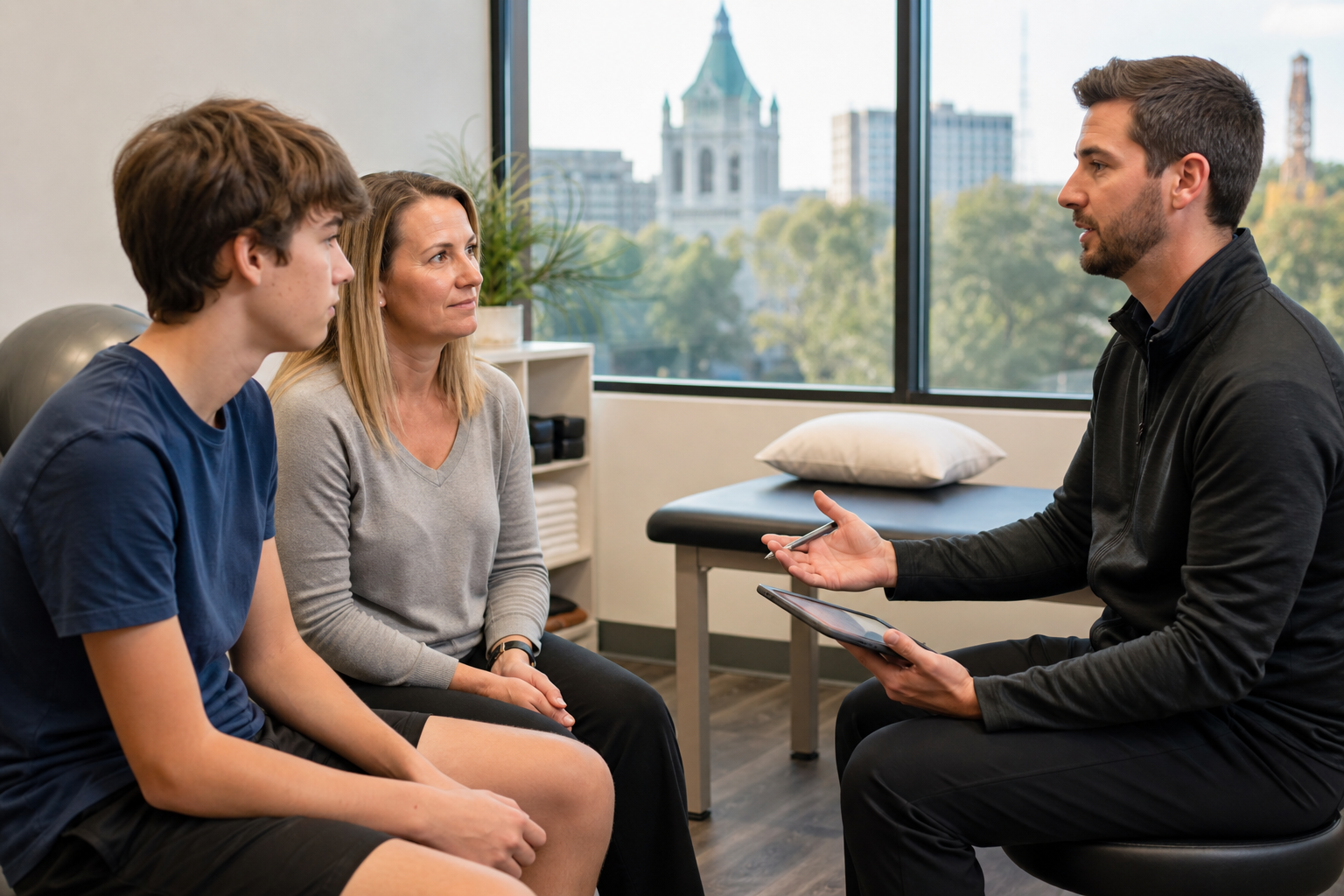
Concussion Rehabilitation in London, Ontario: What It Means and When It May Help
Concussion rehabilitation is individualized care that may help address ongoing symptoms, activity limitations, and the practical work of returning to school, work, sport, or daily life. It is not a substitute for medical assessment, diagnosis, or clearance.
If a concussion is suspected, appropriate medical evaluation comes first. Once urgent concerns have been addressed, rehabilitation may support persistent or activity-limiting symptoms through monitored, goal-based care.
Key Takeaways
- Concussion rehabilitation is personalized and focuses on managing symptoms and returning to daily activities.
- Seek medical assessment first if a concussion is suspected; rehabilitation follows when symptoms persist.
- Foundation Physiotherapy and Rehab offers specialized care for all ages, addressing headaches, dizziness, and cognitive fatigue.
- Effective rehabilitation includes individualized assessment, symptom monitoring, and clear communication with medical professionals.
- Consider a complimentary consultation to discuss rehabilitation needs before starting care.
Quick summary

- Call 911 for a life-threatening emergency, such as unconsciousness or a seizure.
- Arrange medical assessment when a concussion is suspected rather than treating it as a routine injury.
- Rehabilitation may address headaches, dizziness, visual demands, fatigue, neck-related concerns, and reduced activity tolerance.
- Choose a provider who offers individualized assessment, symptom monitoring, clear explanations, and communication with appropriate medical professionals.
- Foundation Physiotherapy and Rehab offers one-on-one concussion rehabilitation for adults, teens, and children in London, Ontario.
What is concussion rehabilitation?
Concussion rehabilitation is a personalized process designed to help a person manage symptoms and gradually resume meaningful activities. It is not a standard exercise routine. A clinician considers symptoms, daily responsibilities, current tolerance, medical guidance, and functional goals.
Depending on the assessment, rehabilitation may address headaches, dizziness, balance concerns, visual demands, cognitive fatigue, neck-related concerns, or difficulty tolerating physical and mental activity. Not every person needs every intervention.
At Foundation Physiotherapy and Rehab, concussion rehabilitation is described as individualized care for adults, teenagers, and children. The clinic identifies vestibular symptoms, visual disturbances, cervical involvement, headaches, fatigue, and cognitive difficulty as concerns that may be considered during care.
Rehabilitation does not independently diagnose a concussion, determine whether an injury is medically safe to ignore, or provide medical clearance. Those decisions require appropriate medical care and follow-up.
Medical assessment comes first when a concussion is suspected

Medical assessment and rehabilitation have different roles. If a person may have a concussion, a physician or nurse practitioner should assess the injury and guide the next steps. Rehabilitation can then form part of a broader recovery plan when symptoms or functional limitations remain.
Ontario describes concussion management as potentially involving multidisciplinary care and follow-up from diagnosis through treatment, management, and clearance. The province’s concussion management guidance for health care providers provides further context.
Seek emergency help for a life-threatening concern. For a suspected concussion without an emergency sign, arrange medical assessment before beginning a self-directed rehabilitation program. If symptoms change or worsen, contact an appropriate medical professional rather than assuming exercise or rest alone is the right response.
| Situation | Next step | Why it matters |
|---|---|---|
| Possible life-threatening emergency | Call 911 | Emergency assessment takes priority over rehabilitation. |
| Suspected concussion without an emergency sign | Seek assessment from a physician or nurse practitioner | A medical professional can evaluate the injury and recommend next steps. |
| Persistent symptoms or difficulty resuming activities | Discuss individualized concussion rehabilitation | Rehabilitation may address functional limitations and support gradual return to activity. |
| Symptoms change or worsen | Contact an appropriate medical professional | New or worsening concerns should not be managed through self-directed exercise alone. |
What concerns may concussion rehabilitation address?
Concussion rehabilitation is best understood by the problems it may help a person manage. The clinician considers which symptoms interfere with function and how those symptoms respond to activity.
Headaches
Headaches may become more noticeable during movement, screen use, reading, concentration, physical exertion, or other daily tasks. Assessment can help identify relevant activity patterns and determine whether headache-related limitations belong in the rehabilitation plan.
Dizziness and balance concerns
Dizziness, motion sensitivity, unsteadiness, or difficulty in visually busy environments can affect walking, school, work, exercise, and confidence. Where appropriate, rehabilitation may include assessment of vestibular or balance-related factors. The goal is to understand how symptoms affect function rather than assume their cause.
Visual demands and cognitive fatigue
Reading, computer work, classroom tasks, phone use, or movement through busy environments may be difficult for some people after a concussion. A plan may consider how visual demands influence symptoms and how activities can be adjusted or progressed within the person’s tolerance.
Feeling mentally tired, foggy, slowed down, or unable to concentrate can make school, work, and household responsibilities harder. Care may focus on the relationship between cognitive demands, rest, activity, and symptom response.
Neck-related concerns
Neck pain or stiffness can occur alongside concussion symptoms and may affect movement, headaches, sleep, or tolerance for daily activity. A clinician may consider cervical involvement when deciding what should be assessed. This does not mean neck treatment is appropriate for everyone.
Reduced activity tolerance
Some people find that physical or mental activity brings on symptoms sooner than before the injury. Rehabilitation may support a carefully monitored progression toward activities that matter to the person, without promising a fixed timeline.
How rehabilitation goals change across daily life
The right rehabilitation goal is usually functional. For a student, it may involve tolerating classroom learning, reading, screens, or a return-to-learn plan. For an employee, it may involve computer work, commuting, communication, or physical job duties. An athlete may need support with exercise tolerance and sport-specific demands.
Progress should reflect symptoms, response to activity, and guidance from the professionals involved. A graded progression is not identical for everyone. The amount, type, and timing of activity should reflect the person’s presentation and goals.
Communication matters when several professionals are involved. A rehabilitation provider should be willing to recommend medical follow-up when symptoms do not behave as expected.
Age and context matter in concussion care
Children, teenagers, and adults may have different responsibilities and recovery goals. A child may need support with play and school routines. A teenager may be balancing academics, screens, social activities, and sport. An adult may be managing work, caregiving, commuting, or household demands.
Foundation Physiotherapy and Rehab states that it provides concussion rehabilitation for adults, teens, and children. Care should still be based on individual symptoms, age, activity level, medical guidance, and functional needs.
How to choose concussion rehabilitation in London
When comparing concussion rehabilitation providers in London, ask how the provider assesses symptoms, tracks response to activity, explains the plan, and communicates with other professionals when medical follow-up is needed.
- Individualized assessment: The provider should consider symptoms, daily demands, medical history, and personal goals.
- Functional focus: Care should connect to a meaningful goal, such as returning to school, work, sport, exercise, or everyday tasks.
- Symptom monitoring: The provider should explain how to observe symptom response and when reassessment is needed.
- Clear communication: You should understand the plan, home recommendations, and when to contact a medical professional.
- Age-appropriate care: Children and teens may have different school, family, and activity needs than adults.
- Relevant clinical experience: Ask whether the team has experience with the symptoms and functional concerns affecting you.
Foundation Physiotherapy and Rehab is located at Unit 100, 540 Wharncliffe Road South in London, Ontario. The clinic describes its care as one-on-one and evidence-based. Its team information also describes concussion management experience among its clinicians.
What to do next if symptoms are affecting your routine
Separate urgent concerns from rehabilitation needs. Call 911 for a life-threatening emergency, arrange medical assessment for a suspected concussion, and follow the medical advice you receive. If symptoms persist or interfere with normal activities, ask whether individualized rehabilitation is appropriate.
Before an appointment, note which activities trigger symptoms, how long you can tolerate them, and which responsibilities are difficult. This helps connect assessment to real-life goals instead of focusing only on symptom labels.
People in London who are unsure whether concussion rehabilitation is appropriate can consider Foundation Physiotherapy and Rehab’s complimentary 10 to 15 minute consultation. It may provide direction before starting care, but it does not replace medical assessment.
Frequently asked questions
Can children and teenagers receive concussion rehabilitation?
Yes. Foundation Physiotherapy and Rehab offers individualized concussion rehabilitation for adults, teens, and children. Goals may differ by age, so care should account for school, play, sport, family routines, and current symptoms. Medical assessment remains important when a concussion is suspected.
Can concussion rehabilitation help with dizziness or balance problems?
It may, when assessment indicates that vestibular or balance-related rehabilitation is relevant. Dizziness can affect walking, exercise, school, work, and visually busy environments, but its cause and appropriate treatment should be evaluated rather than assumed.
When should I seek medical follow-up instead of managing symptoms with exercise?
Seek medical follow-up when a concussion has not been appropriately assessed, when symptoms change or worsen, or when you are unsure whether activity is safe. Rehabilitation supports functional recovery but does not replace medical evaluation, diagnosis, or clearance.
Conclusion
Concussion rehabilitation means individualized support for symptoms, function, activity tolerance, and meaningful return-to-life goals. It may address headaches, dizziness, visual demands, cognitive fatigue, neck-related symptoms, and reduced tolerance for school, work, sport, or daily activities.
The safety-first decision is clear: obtain appropriate medical assessment when a concussion is suspected, address emergencies urgently, and consider rehabilitation when persistent symptoms or functional limitations continue. In London, look for individualized assessment, monitoring, clear communication, age-appropriate planning, and coordination with medical professionals.
For local information about one-on-one concussion rehabilitation for adults, teens, and children, visit Foundation Physiotherapy and Rehab in London, Ontario.