
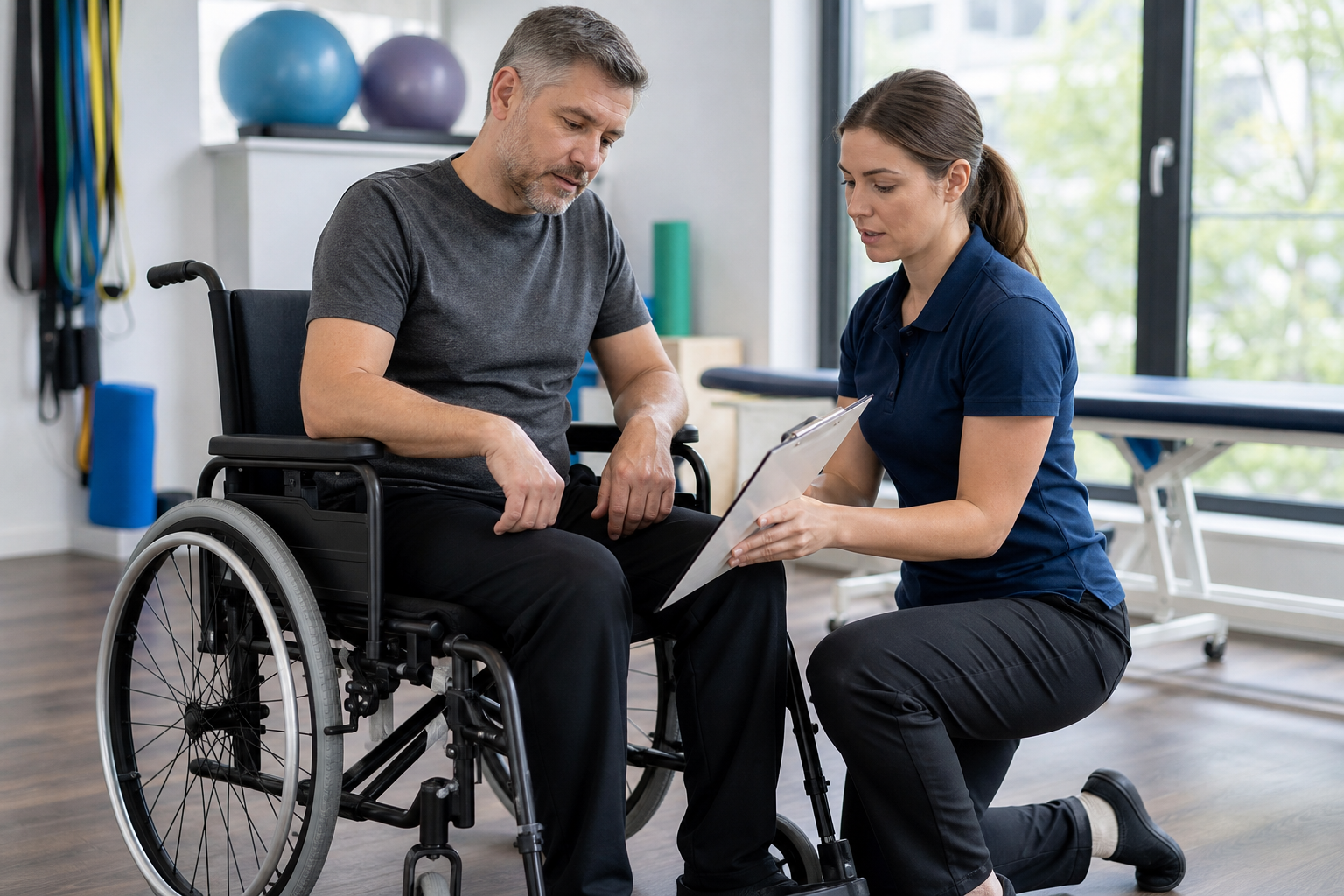
Before Applying for ADP Mobility Funding in London, Check These Common Mistakes
If you are searching for ADP funding navigation in London, your practical goal is likely to get informed help with an application for a walker, wheelchair, seating system, or another mobility aid. A strong application connects the equipment to your everyday functional needs, uses accurate device information, and makes costs and vendor responsibilities clear before you buy.
Ontario’s Assistive Devices Program (ADP) helps eligible residents with long-term physical disabilities pay for customized equipment, including mobility devices. ADP makes the funding decision. An assessor, prescriber, vendor, or physiotherapy clinic can help prepare supporting information, but none can guarantee approval.
How ADP mobility funding works before you apply
ADP eligibility generally involves Ontario residency, a valid Ontario health card, a physical disability requiring equipment for six months or longer, and clinical criteria specific to the device. Requirements can vary by equipment category, so verify the current rules rather than relying on an old application or informal advice. Review the Ontario ADP eligibility information before your assessment.
For many eligible mobility devices, ADP may pay up to 75 percent of the approved price. This is not a universal reimbursement rate, and it may not cover every component, customization, service charge, or amount above the approved price. Ask for a clear explanation of the consumer contribution and any additional costs before accepting an equipment recommendation.
Readers comparing options can review ADP funding for mobility aids for further information about contribution limits, documentation, product codes, vendor rules, and common delays.
Know who does what: applicant, assessor, vendor, and ADP

The applicant or caregiver supplies accurate information about daily function, current equipment, medical history, and the environments where the device will be used. Specific examples are important because a diagnosis alone may not explain the equipment need.
The clinical assessor or prescriber evaluates functional need and completes the clinical justification required for the relevant application. The vendor supplies or fits equipment, prepares pricing information, and may coordinate billing. ADP reviews the application against its program rules and makes the final funding decision.
These roles may work together, but they are not interchangeable. A vendor does not determine clinical eligibility, an assessor does not approve government funding, and a clinic providing assessment or documentation support cannot promise reimbursement.
Common ADP application mistakes to check before submitting
| Concern | Why it matters | What to verify |
|---|---|---|
| Vague description of limitations | A diagnosis alone may not show why equipment is needed. | Walking distance, stairs, transfers, falls, frequency, and safety concerns. |
| Missing history of ongoing need | Fluctuating or progressive conditions may require supporting records. | Recent therapy notes, medical summaries, and relevant treatment history. |
| Incorrect device details | Product categories, codes, prices, and sizing rules affect the application. | Exact model, components, code, measurements, and configuration. |
| Unclear custom work | Custom components are not automatically fully funded. | Applicable codes, justification, approved amount, and uncovered costs. |
| Buying too early | Payment before approval may create reimbursement or billing risk. | Vendor registration, approval status, and payment terms. |
| Assuming approval is guaranteed | Clinical support does not replace ADP’s review. | What is known, what remains conditional, and who makes each decision. |
Describing a diagnosis without explaining daily function
“Arthritis,” “neurological condition,” or “difficulty walking” may be accurate, but these phrases do not fully show how mobility affects your life. Prepare notes about how far you can walk, whether you need to stop or rest, how stairs affect you, whether transfers require help, and whether falls or near-falls occur.
Include the difference between your best and typical days. Note whether you need support at home, outdoors, at work, or in the community, and describe what your current device cannot safely handle. Record how often assistance is needed rather than writing only that mobility is difficult.
Leaving out the history of an ongoing need
ADP equipment is intended for an ongoing need, not simply a short-term inconvenience. If your condition fluctuates, progresses, or has changed over time, a brief explanation without supporting history may lead to questions or requests for more information.
Gather relevant physiotherapy notes, medical summaries, diagnostic information, and records of treatments or equipment already tried. Ask the assessor which records are relevant to your device category, and provide consistent information about how your mobility has changed. No document guarantees approval, but complete records can make the clinical picture clearer.
Using the wrong product code or overlooking equipment details
Mobility equipment is grouped into categories with corresponding product codes, approved prices, sizing rules, and requirements for specialized or custom work. A mismatch between the recommended equipment and the code on an application or quote can delay review while the information is corrected.
Ask for the exact device description, product code, measurements, included components, and proposed configuration. If the recommendation includes seating, positioning, power controls, special sizing, or other additions, ask whether each item is included in the quote and how it appears in the ADP paperwork. Current program documentation should take priority over an outdated quote or verbal assumption.
Assuming custom modifications are automatically covered
A device may be eligible while a particular modification, upgrade, or custom component is treated differently. Funding is generally based on the approved price and applicable program rules, not simply the total amount a vendor quotes.
Request a written breakdown of the approved device, custom work, consumer contribution, and any amount that may remain your responsibility. Ask whether additional justification or a special code is needed. If the answer is uncertain, clarify it with the assessor and vendor before accepting the equipment.
Purchasing equipment before approval and billing are clear
Buying first can create financial risk. If you pay the full amount, use a seller that is not ADP-registered, or proceed before the application pathway is clear, you may not receive the reimbursement you expected.
Ask whether the vendor is currently ADP-registered for the relevant equipment category, whether it bills ADP directly, and what you would owe at each stage. Confirm what happens if the application is delayed, changed, or declined. A preliminary recommendation or quote is not confirmation that ADP has approved the purchase.
Treating clinical support as a promise of approval
A thorough assessment can improve the clarity of an application, but it cannot guarantee an outcome. Approval depends on the submitted evidence, equipment category, current program criteria, and ADP’s review.
Ask your assessor which parts of the application they complete, which information you must provide, and what remains uncertain. Keep copies of submitted forms, clinical notes, quotes, correspondence, and any approval or request for additional information.
ADP mobility assessment preparation checklist
Prepare the following information before an assessment in London:
- Daily mobility: walking distance, standing tolerance, stairs, transfers, falls, near-falls, fatigue, and pain.
- Current support: devices you use now, what works, what does not, and how often you need help.
- Environments: entrances, stairs, bathrooms, work or school areas, sidewalks, transportation, and other places where the device will be used.
- Functional goals: safer transfers, greater independence, community access, reduced fall risk, or the ability to complete necessary activities.
- Records: medical summaries, therapy notes, prior device information, and treatments or equipment already tried.
- Cost questions: approved-price basis, consumer contribution, custom work, delivery, fitting, repairs, and payment timing.
- Documentation: names and roles of everyone involved, copies of forms, product quotes, and submission dates.
If you need a wheelchair, check fit and follow-up as well as funding
A wheelchair assessment involves more than selecting a chair. It may include functional evaluation, seating and positioning, measurements, clinical documentation, equipment selection, vendor coordination, delivery, and follow-up adjustments.
Ask how the proposed chair will be tested against your home and community routines. After delivery, pay attention to comfort, posture, pressure points, reach, foot support, control access, and your ability to complete everyday tasks. The wheelchair assessment process explains how assessment, documentation, vendor involvement, and post-delivery fitting connect.
Choosing ADP mobility assessment support in London
When comparing a private clinic, hospital program, or another assessment setting, do not choose based only on a promise of speed or approval. Ask whether the service addresses your device category and whether the assessor can explain the clinical documentation, vendor coordination, and follow-up involved.
- Who conducts the assessment, and what role do they have in the application?
- Will the assessment consider your home, community, work, or school environments?
- Can you discuss different device configurations or trial options?
- Who reviews the application for completeness before submission?
- How are vendor quotes, product codes, and custom components checked?
- What follow-up is available for fitting, adjustments, or changed needs?
- Which costs are paid to the clinic, vendor, or another provider, and when?
Foundation Physiotherapy and Rehab is located at Unit 100, 540 Wharncliffe Road South in London. Its service information describes mobility assessments, walker and wheelchair prescriptions, seating and positioning, ADP documentation, and fall prevention. This describes assessment support, not a guarantee of ADP approval or a statement that the clinic makes government funding decisions.
Questions to ask before you submit or purchase
- What functional evidence is needed for this device category?
- Which clinician completes each section of the application?
- What device, model, measurements, and product code are proposed?
- What is the approved-price basis, and which costs may remain uncovered?
- Are custom components included, separately justified, or subject to additional rules?
- Is the vendor ADP-registered for this equipment?
- How will billing work, and what should I avoid paying before approval?
- What happens if ADP requests more information or does not approve the application?
- Who handles delivery, fitting, repairs, and follow-up adjustments?
Frequently asked questions about ADP mobility funding in London
Does ADP pay the same percentage for every mobility device?
No. For many eligible mobility devices, ADP may pay up to 75 percent of the approved price, but the percentage and approved amount depend on program rules, the device category, and the application. Custom work and costs above the approved amount may be treated separately.
Can a private mobility assessment support an ADP application?
A private assessment may support an application when the professional and service meet the relevant program requirements. Ask who completes the clinical documentation, whether the assessment suits your equipment category, and how the vendor and application steps will be coordinated. Confirm current requirements before booking.
Who makes the final decision on ADP funding?
ADP makes the final funding decision. The applicant supplies information, the assessor or prescriber documents clinical need, and the vendor provides equipment and pricing information. Their roles support the application but do not guarantee its outcome.
What should I do if my wheelchair needs adjustment after delivery?
Contact the assessor and vendor promptly and describe the specific problem, such as pressure, posture, reach, control access, or difficulty completing a daily task. Follow-up fitting and adjustments may be needed after you use the chair in real situations.
Make your next ADP step easier to verify
The safest approach to ADP funding navigation in London is to prepare evidence before discussing equipment, describe functional limitations in everyday terms, confirm current program and vendor rules, and separate the approved price from your possible consumer contribution. Assessment support can organize clinical information and equipment choices, but ADP retains responsibility for the funding decision.
Gather your mobility examples, relevant records, current equipment details, and cost questions before booking. To discuss whether its mobility-assessment and ADP documentation services fit your needs, contact Foundation Physiotherapy and Rehab in London, Ontario.