
Assistive Devices and Mobility Assessments Explained
An assistive device and mobility assessment is a clinical evaluation used to determine what type of mobility support fits a person’s abilities, daily activities, environment, safety needs, and long-term goals. It can help inform decisions about a cane, walker, wheelchair, seating system, or powered mobility device.
The goal is not simply to choose equipment from a catalogue. A proper assessment considers how the person moves, where the device will be used, how it will be transported, and whether it can be operated safely.
What are assistive devices and mobility assessments?
An assistive device is equipment that supports movement, balance, transfers, positioning, or independence. Examples include canes, walkers, manual wheelchairs, power wheelchairs, scooters, cushions, and seating components.
A mobility assessment examines the relationship between the person, the device, and the environment. It may consider physical abilities, walking and transfer performance, balance, symptoms, home layout, lifestyle, and long-term goals. The result may be a recommendation, prescription, funding documentation, or a plan to trial different options.
When should you consider a mobility assessment?

You may benefit from an assessment when mobility has changed or existing equipment no longer meets your needs. Common reasons include a new or worsening walking limitation, balance or gait changes, falls or near-falls, increasing fatigue, discomfort with a current device, or difficulty moving around the home or community.
An assessment may also help after surgery, illness, or a functional change, or when a progressive condition affects walking or transfers. Family members and caregivers may notice practical problems first, such as unsafe bathroom transfers, difficulty managing doorways, or reduced ability to complete usual errands.
Needing funding documentation is another reason to arrange an evaluation. An assessment does not guarantee that a particular device will be prescribed or that an application will be approved.
What does a mobility assessment consider?
A clinician may observe walking, turning, transfers, sitting posture, reaching, endurance, device handling, and symptom response. The purpose is to understand what support is needed for real activities, not only for a short demonstration.
The environment matters too. Narrow hallways, stairs, flooring, thresholds, bathroom layouts, vehicle access, and outdoor surfaces can affect which options are practical. Daily routines, work or school demands, community travel, caregiver availability, and energy conservation may also influence the decision.
The least supportive device is not automatically the best choice. A device that is too difficult to control may be unsuitable, while one that provides too little support may not address the person’s needs. The assessment should balance support, independence, comfort, safety, and likely use over time.
Common mobility assessment areas compared
| Assessment area | What may be considered | Practical question |
|---|---|---|
| Canes and walkers | Support level, height, gait pattern, turning, fatigue, and surfaces | Can the person use the aid consistently and safely? |
| Manual wheelchairs | Seat dimensions, foot support, cushion, posture, transfers, propulsion, and transport | Is the chair suitable for the person’s body and daily distances? |
| Seating and positioning | Trunk and pelvic support, comfort, pressure considerations, posture, and stability | Does the system support a functional position throughout the day? |
| Power wheelchairs and scooters | Functional need, controls, joystick configuration, operation, access, and transport | Can the person operate the device where it will be used? |
| Balance and fall concerns | Gait changes, transfers, environmental barriers, confidence, and current equipment | What changes could make everyday movement safer? |
Walkers, canes, and other walking aids
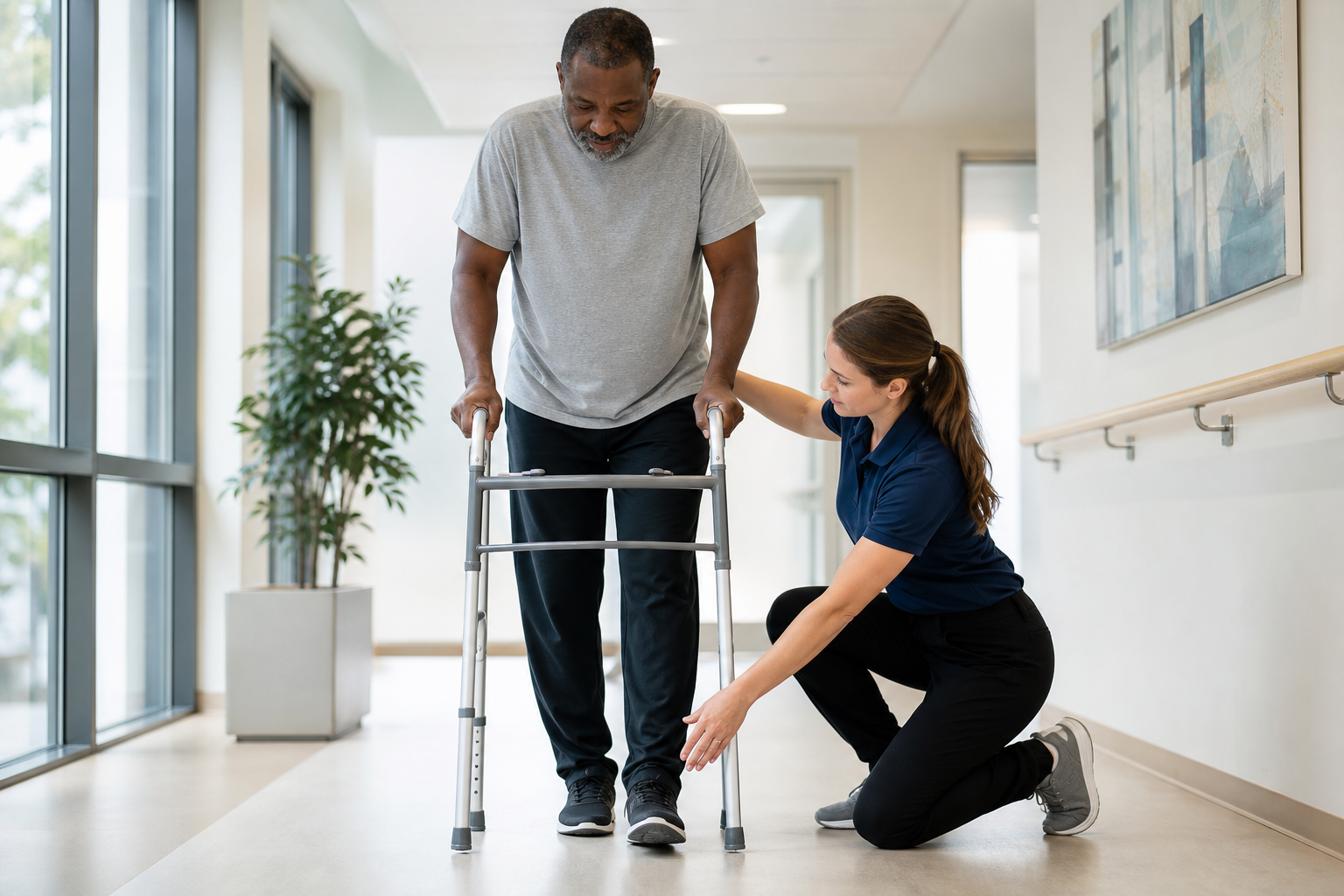
A walker assessment is more than selecting a frame with the right number of wheels. The clinician may consider how much support is needed, whether the person can advance the aid, how they turn, and how the device performs on familiar surfaces. Brakes, a seat, hand placement, and thresholds may also matter.
A cane may be appropriate in some situations, but it is not interchangeable with a walker or another aid. Height, balance, strength, coordination, pain, and the ability to follow a safe walking pattern all affect suitability. A professional trial can identify handling problems before equipment becomes part of the daily routine.
Manual wheelchairs and seating evaluations
A wheelchair prescription should account for more than whether the chair rolls. Seat width and depth, foot support, cushion selection, posture, transfers, propulsion, and typical distances can all influence comfort and function. The home, vehicle, workplace, and community may impose different requirements.
Seating evaluations are especially relevant when positioning, stability, comfort, or remaining seated for longer periods is a concern. A chair that fits poorly can be difficult to propel, transfer from, or transport.
Power wheelchairs and powered mobility devices
Powered mobility assessments examine whether a power wheelchair, scooter, or another powered option matches functional requirements and daily environments. Areas of consideration may include control method, joystick configuration, steering, turning space, home access, community routes, transport, charging, and safe operation.
The assessment should also consider longer-term needs. A device that works in one room may not work outdoors, and a device that meets today’s needs may not remain appropriate if abilities change.
Why fit, trial, and environment matter
Online shopping can make equipment seem easy to compare, but product descriptions rarely show how a device will work in a particular home or routine. Sizing, seat dimensions, support level, turning space, transfers, terrain, and transport can all be missed without an in-person review.
A structured trial allows options to be compared in a controlled way. A mobility assessment checklist can help organize baseline observations, existing equipment, safety questions, and practical details before the appointment.
How to prepare for a mobility assessment
Write down what has changed, which activities are difficult, and what you want to do more comfortably or independently. Include recent surgery, illness, injuries, diagnoses, symptoms, and changes in endurance or balance.
- Bring a current medication list and relevant medical or therapy records.
- Note where mobility is difficult, such as stairs, bathrooms, entrances, work areas, or outdoor routes.
- Bring your current cane, walker, wheelchair, or other equipment when appropriate.
- Wear stable footwear that reflects what you normally use.
- Describe vehicle, public transportation, school, work, and community access needs.
- Ask a caregiver or family member to attend if they assist with transfers or device use.
- Bring funding paperwork, referral details, or documentation questions.
Explaining what happens on both a good day and a difficult day can be more useful than describing only one short walk during the appointment.
How Ontario ADP funding fits into the process
Ontario’s Assistive Devices Program, or ADP, helps fund certain mobility devices for eligible applicants. The official provincial information states that applicants must be Ontario residents with a valid Ontario health card and a disability requiring a mobility aid for six months or longer. It also identifies a remaining 25 percent contribution for the covered mobility aids described there. Applicants should verify current rules for their specific device and circumstances.
ADP coverage is not universal, and eligibility does not mean every device, modification, or price will be approved. Product categories, documentation, approved amounts, and professional requirements can affect an application. An assessment may provide clinical information, but it cannot guarantee funding.
Before applying, review the current Ontario mobility aids and ADP information. People who want a practical overview of eligibility, documentation, product codes, and possible ADP funding for mobility aids should confirm details with the assessor and provincial program.
Questions to ask before booking
- Does the clinician assess the device category I am considering?
- Should I bring my current walker, wheelchair, cane, or seating system?
- What records, forms, or identification should I bring?
- Would caregiver or family input be helpful?
- What documentation will be provided after the assessment?
- Can the clinician support relevant ADP documentation for this device category?
- What costs and next steps should I confirm before proceeding?
Local assessment support in London, Ontario
Foundation Physiotherapy and Rehab provides assistive devices and mobility assessments in London, Ontario. Its verified service offering includes walker and wheelchair prescriptions, seating evaluations, powered mobility assessments, fall prevention support, and ADP-authorized guidance.
The clinic is located at Unit 100, 540 Wharncliffe Road South, London, Ontario, and offers a complimentary 10–15 minute initial consultation for prospective patients. An introductory conversation can help clarify whether the service fits the question you are trying to answer.
Frequently asked questions
Do I need a mobility assessment before buying a walker or wheelchair?
Not every purchase requires a formal assessment, but professional input is valuable when mobility has changed, safety is uncertain, or fit and function are important concerns.
What should I bring to a mobility assessment?
Bring current equipment, usual footwear, a medication list, relevant records, funding paperwork, and a description of daily routes and goals. Caregiver observations may also help.
Can a mobility assessment support an Ontario ADP application?
It may provide clinical assessment and documentation when the clinician and device category meet ADP requirements. It does not guarantee eligibility, approval, or coverage.
Does ADP cover the full cost of a mobility device?
No general promise can be made about full coverage. The official Ontario information identifies a remaining 25 percent contribution for the covered mobility aids described on its page. Verify details for the specific device.
Can a mobility assessment evaluate a power wheelchair or scooter?
Yes, powered mobility can be an assessment area. The evaluation may consider functional need, controls, safe operation, home and community access, transport, and longer-term suitability.
Choosing the next step
An assistive devices and mobility assessment is useful when the decision involves more than choosing a product. If mobility, balance, comfort, transfers, equipment fit, home access, or funding documentation is uncertain, an individualized evaluation can organize the decision around real activities and environments.
Prepare your symptoms, goals, daily routes, existing equipment, and questions. Verify Ontario ADP requirements separately, because eligibility and coverage depend on current rules and the specific device. For local support, contact Foundation Physiotherapy and Rehab in London, Ontario.