
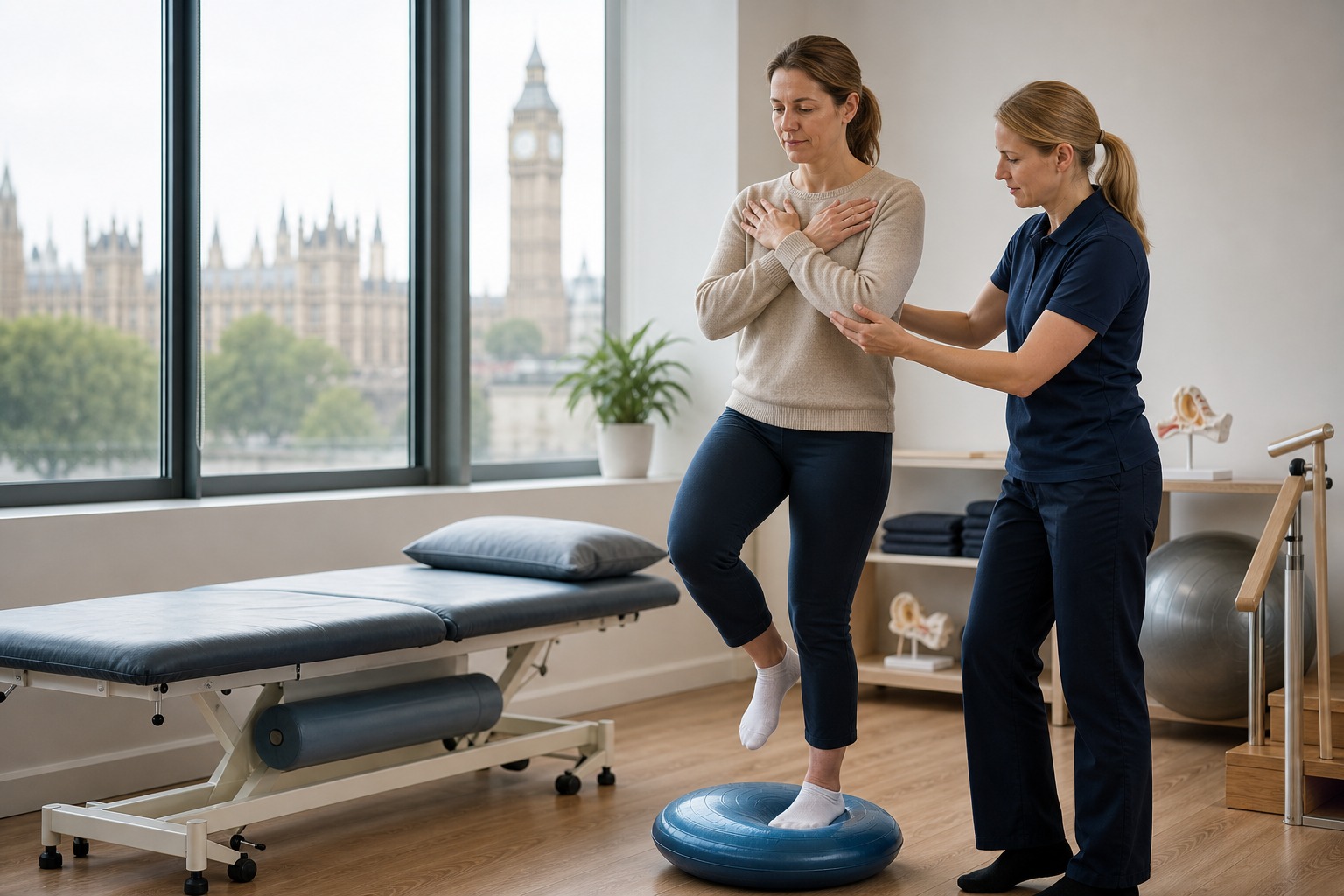
How to Compare Vestibular Rehabilitation Options in London
Vestibular rehabilitation is specialized physiotherapy for selected dizziness, vertigo, BPPV, and balance-related concerns. Because these symptoms can have different causes, the right provider should begin with a thorough assessment rather than offer the same exercise plan to everyone.
When comparing vestibular rehabilitation in London, consider how carefully the provider assesses your symptoms, whether treatment reflects your goals, how home guidance is managed, and whether the clinic communicates clearly about the limits of physiotherapy.
What Vestibular Rehabilitation May Help Assess
Dizziness may feel like light-headedness, unsteadiness, or difficulty orienting yourself. Vertigo commonly refers to a sensation of movement, such as spinning, even when you are still. BPPV is one possible contributor to positional vertigo, while balance problems may affect walking, turning, standing, or confidence during everyday activities.
These descriptions are not a diagnosis. A provider should understand when symptoms occur, what activities affect them, and how they influence function before recommending care. If balance retraining is part of your concern, you can also read about balance retraining in London, Ontario.
How to Compare Vestibular Rehabilitation Providers

There is no single clinic that is right for everyone. Use these criteria to compare providers fairly and identify the questions that deserve an answer before booking.
1. Look for a Thorough, Relevant Assessment
A useful first appointment should give the provider time to understand your symptoms, health context, activity limitations, and goals. Ask how the clinic approaches dizziness, vertigo, BPPV, or balance concerns and how the assessment informs treatment.
Also ask what happens if your presentation does not fit physiotherapy or requires additional medical input. A responsible provider should explain the scope of care and recognize when coordination or referral may be appropriate.
2. Check Whether Treatment Is Built Around Your Goals
Two people can describe “dizziness” but need different support. One person may want to walk more safely, another may need help returning to work, and another may be struggling with daily activities.
Ask how your priorities will shape the plan and how the provider will decide whether the approach needs to change. Foundation Physiotherapy and Rehab describes its model as one-on-one, evidence-based care based on thorough assessment, personalized planning, and progressive strength building.
3. Confirm Experience With Your Main Concern
When contacting a clinic, name the issue that matters most to you. Ask about dizziness or vertigo, suspected BPPV, balance limitations, concussion-related symptoms, or overlapping vestibular and musculoskeletal concerns.
Relevant experience can help identify a suitable starting point, but it does not replace individualized assessment. Foundation offers vestibular rehabilitation alongside concussion rehabilitation, orthopedic and musculoskeletal physiotherapy, and functional rehabilitation.
4. Ask How Progression and Home Guidance Are Managed
Vestibular rehabilitation should not be reduced to a generic list of exercises. Ask how guidance will be explained, how activities are selected, and how the provider decides when to adjust or progress the plan.
Clear home instructions can make it easier to understand what you are working on between appointments. Ask how follow-up reviews your response and determines what comes next without relying on a fixed recovery promise.
5. Evaluate Communication and Referral Boundaries
A provider should explain findings in understandable language, welcome questions, set realistic expectations, and make sure you understand the purpose of the recommended plan.
Ask what the clinic does when symptoms change, remain unclear, or appear to require another type of evaluation. This helps you understand both what vestibular rehabilitation may offer and where the provider’s role ends.
6. Consider Location, Format, and Starting Options
Practical fit matters because rehabilitation may involve more than one appointment. Consider whether the location is manageable, whether care is one-on-one, and whether appointment times suit your schedule.
Before beginning fee-for-service care, confirm pricing, booking arrangements, appointment length, and what the first visit includes. A short introductory conversation can help you decide whether the clinic appears appropriate.
A Local Option in London, Ontario
Foundation Physiotherapy and Rehab provides vestibular rehabilitation in London, Ontario, for dizziness, vertigo, BPPV, and balance disorders. The clinic is located at Unit 100, 540 Wharncliffe Road South, in the Larlyn Building between London Honda and Sun Life.
The clinic’s approach combines one-on-one care with evidence-based physiotherapy, thorough assessment, personalized treatment planning, and progressive rehabilitation. Its broader services include concussion rehabilitation, orthopedic and musculoskeletal physiotherapy, functional rehabilitation, and mobility assessments.
Prospective patients can begin with a complimentary 10–15 minute consultation. Use it to describe your main concern, ask whether vestibular rehabilitation may be suitable, and clarify the next step without assuming a diagnosis or guaranteed outcome.
Questions to Ask Before Booking
- How do you assess dizziness, vertigo, BPPV, or balance concerns?
- How will my symptoms and daily goals shape treatment?
- Do you work with people who also have concussion, orthopedic, or mobility concerns?
- How will home guidance be explained and adjusted?
- How do you review progress and decide whether the plan should change?
- What happens if another healthcare professional should be involved?
- What are the fees, appointment format, scheduling options, and cancellation requirements?
- Do you offer a consultation before ongoing care begins?
When a Professional Assessment Makes More Sense Than Self-Directed Exercises
Online information may explain general terms, but it cannot determine why you feel dizzy or unsteady. Consider professional assessment when symptoms are unexplained, recurring, persistent, affect daily activities, or are difficult to describe.
Assessment is also useful when balance limitations overlap with concussion symptoms, pain, weakness, or mobility changes. Rather than choosing exercises from an online description, discuss the pattern with a qualified provider.
Vestibular Rehabilitation FAQ
What concerns can vestibular rehabilitation address?
It may be considered for selected dizziness, vertigo, BPPV, and balance-related concerns. A provider should assess your individual presentation before recommending treatment.
Can vestibular rehabilitation assess BPPV and balance problems?
A provider can discuss BPPV and balance concerns as part of an individualized assessment. The purpose is to understand your symptom pattern rather than assume every episode has the same cause.
What should I ask before booking?
Ask about assessment, relevant experience, personalized planning, home guidance, follow-up, referral boundaries, fees, and appointment format. Explain which activities are difficult and what you hope to do more comfortably.
How can I start with Foundation Physiotherapy and Rehab?
Foundation offers a complimentary 10–15 minute consultation. Use it to describe your concern and ask whether an assessment at the London clinic is an appropriate next step.
Choose an Assessment-Led Starting Point
The strongest comparison is not about finding the clinic with the most impressive promise. It is about finding a provider that assesses your concern carefully, connects care to your goals, communicates clearly, and explains when another healthcare professional may be needed.
Foundation Physiotherapy and Rehab offers one-on-one vestibular rehabilitation for dizziness, vertigo, BPPV, and balance disorders at its Wharncliffe Road location. To ask questions or arrange the complimentary 10–15 minute consultation, visit Foundation Physiotherapy and Rehab.