
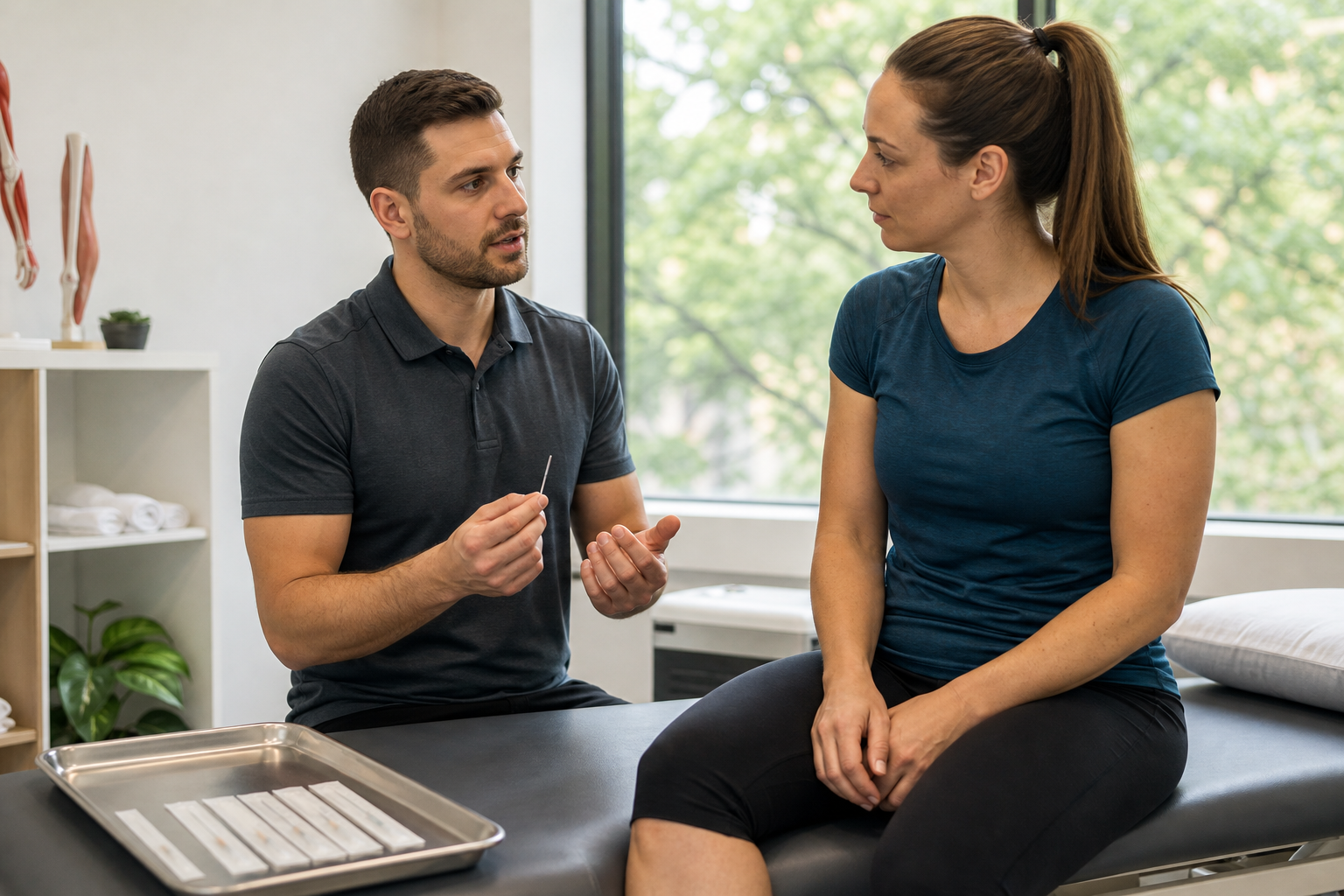
Dry Needling for Trigger Points: What It Is and How It Differs From Acupuncture
Dry needling trigger point therapy uses thin needles to target selected areas of muscular tension, often called trigger points. It may be worth discussing when muscular pain, nerve sensitivity, or chronic tension affects movement or daily activities, but it is not automatically the same as IMS or traditional acupuncture.
The most useful way to evaluate it is to understand the treatment model, compare the terminology, and ask how a qualified physiotherapist would determine whether it fits your symptoms and goals. This guide explains what to expect without suggesting that needling is suitable for everyone.
What Is Dry Needling Trigger Point Therapy?
A trigger point is a sensitive area within a muscle that may feel tight, tender, or painful when pressed. In dry needling trigger point therapy, a thin needle is inserted into a selected muscular point with the aim of addressing tension in that area.
The clinic describes dry needling as targeting trigger points to provoke a twitch response intended to release muscle tension. A twitch can be part of the treatment experience, but it should not be presented as proof that treatment will work or as a guarantee of pain relief.
A physiotherapist should first consider your symptoms, history, movement, goals, and assessment findings. Treatment may also include exercise prescription or manual techniques when appropriate.
For a closer look at how dry needling targets trigger points, differs from acupuncture, and may cause brief post-treatment soreness, review the clinic’s treatment information.
Dry Needling, IMS, and Acupuncture: What Is the Difference?

These terms can appear together in physiotherapy information, but they should not be treated as exact synonyms. They describe related needling approaches with different stated treatment goals or explanatory frameworks.
| Approach | How it is described | What to clarify |
|---|---|---|
| Dry needling | Targets selected muscular trigger points using a Western neuroanatomical approach. A brief twitch response may occur. | Which muscle or trigger point is being addressed, and how does it relate to your assessment? |
| IMS or Gunn technique | A form of dry needling described as targeting shortened, sensitized muscles often associated with nerve-related pain. | Why is IMS being recommended instead of, or alongside, another approach? |
| Traditional acupuncture | Uses needle placement along energy meridians based on Traditional Chinese Medicine. | What treatment framework is being used, and what outcome is the plan intended to support? |
The name of the technique matters less than whether the clinician can explain the recommendation clearly. Ask which approach is being proposed, why it fits the assessment, and how it connects to your goals. This also gives you an opportunity to discuss comfort, consent, and alternatives.
What Does Dry Needling Feel Like?
Experiences vary, but the clinic states that patients may feel a brief twitch or cramping sensation when a trigger point is treated. Some people notice a short-lived change in muscle sensation, while others find the experience less noticeable.
Before treatment begins, ask what sensations may occur, how you can signal that you need a pause, and whether you can ask questions during the session. Consent should remain ongoing, not limited to the moment treatment starts.
Needling should not be described as universally painless or as an automatic route to immediate relief. A careful provider will explain what is being attempted and help you decide whether the expected sensations are acceptable for you.
What to Expect After Treatment
Mild muscle soreness may occur after dry needling and may last for 24 to 48 hours, according to the clinic’s service information. That is a general expectation rather than a guaranteed timeline for every person or treatment area.
Ask your physiotherapist what aftercare is appropriate for your session and what changes should prompt you to contact the clinic. Follow the specific guidance you receive rather than assuming the same post-treatment routine applies to everyone.
It is also useful to discuss what happens at the next appointment. The treatment plan may need to be reviewed according to your response, movement goals, and any symptoms experienced afterward.
When Might Dry Needling Be Worth Discussing?
Dry needling may be worth discussing when muscular pain, local tension, nerve sensitivity, or chronic tension is part of the problem you want to address. These descriptions do not establish a diagnosis, and they do not mean needling is necessarily the best option.
The relevant question is not simply, “Can dry needling treat this body part?” Instead, ask whether the approach matches the assessment findings and supports a meaningful goal, such as moving more comfortably or participating in daily activities.
Foundation Physiotherapy and Rehab in London, Ontario describes its care as one-on-one and evidence-based, with individualized assessment and treatment planning. Its dry needling service information presents dry needling, IMS, and traditional acupuncture as distinct approaches, allowing treatment discussions to be matched to the person rather than assumed in advance.
How to Choose a Provider for Needling Treatment
Use this checklist when comparing providers or preparing for an assessment:
- Individualized assessment: The clinician should ask about your symptoms, history, activities, and goals before recommending a technique.
- Clear rationale: You should understand whether the recommendation is dry needling, IMS, or traditional acupuncture, and why it may fit your situation.
- Informed consent: The provider should explain the process, expected sensations, alternatives, and your ability to pause or decline.
- Appropriate qualifications: Ask who will perform the treatment and what training or qualifications they have for that technique.
- Safe equipment practices: Confirm that sterile, single-use needles are used.
- Aftercare guidance: Ask what soreness may be expected, how long it may last, and whom to contact with concerns.
- Progress review: Find out how the plan will be adjusted if the approach does not support your goals or is not comfortable for you.
Foundation Physiotherapy and Rehab states that its dry needling is performed by a qualified physiotherapist using sterile, single-use needles. The clinic also describes a one-on-one care model, which can make it easier to discuss questions and monitor how treatment fits your broader rehabilitation plan.
Questions to Ask Before Booking
- Which approach are you recommending: dry needling, IMS, or traditional acupuncture?
- What did the assessment show, and how does that support the recommendation?
- What might the treatment feel like in the area being treated?
- Can I pause or stop the session if I am uncomfortable?
- Are sterile, single-use needles used?
- What soreness or other short-term sensations should I expect afterward?
- What aftercare will you recommend?
- How will we decide whether the treatment is helping my functional goals?
- What other physiotherapy options could be considered if needling is not suitable?
These questions do not replace an assessment. They help you understand the proposed treatment and decide whether the provider’s explanation gives you enough confidence to proceed.
Considering Dry Needling in London, Ontario
Foundation Physiotherapy and Rehab offers dry needling, IMS using the Gunn technique, and traditional acupuncture in London, Ontario. The clinic is led by physiotherapist and clinic director Nirali Mehta and describes its broader model as one-on-one care with individualized assessment and treatment planning.
Prospective patients can use the clinic’s complimentary 10 to 15 minute consultation to ask questions and clarify possible next steps. A consultation is an opportunity to understand whether an assessment is appropriate, not a promise that dry needling will be recommended.
Frequently Asked Questions
Is dry needling the same as acupuncture?
No. Both use thin needles, but the clinic describes dry needling as targeting muscular trigger points through a Western neuroanatomical approach. Traditional acupuncture is described through needle placement along energy meridians based on Traditional Chinese Medicine. They should not be treated as interchangeable terms.
What are trigger points in dry needling therapy?
Trigger points are sensitive areas within muscles that may feel tight or tender. Dry needling may target selected points with the aim of addressing muscular tension. A clinician should determine whether this model fits your assessment rather than assuming every tender area should be needled.
Does dry needling hurt?
A session may involve a brief twitch or cramping sensation when a trigger point is treated. Comfort varies, so discuss what you may feel, how to request a pause, and what alternatives are available before treatment begins.
How long can soreness last after dry needling?
The clinic states that mild muscle soreness may occur for 24 to 48 hours. This is a general expectation, not a guarantee. Ask your provider what to expect for your specific session and what to do if you have concerns.
What is the difference between dry needling and IMS?
The clinic describes IMS, or the Gunn technique, as a form of dry needling that targets shortened, sensitized muscles often associated with nerve-related pain. Dry needling is commonly described more broadly in relation to muscular trigger points. Your physiotherapist should explain which approach is being considered and why.
Choose the Approach That Fits Your Assessment
Dry needling trigger point therapy, IMS, and traditional acupuncture use related tools but are described through different treatment frameworks. Understanding those distinctions can help you avoid choosing based solely on a label or assuming that a twitch, a particular technique, or a provider’s general recommendation guarantees a result.
The strongest next step is an assessment that connects the proposed approach to your symptoms, goals, consent, comfort, and wider rehabilitation plan. Ask clear questions about qualifications, sterile single-use needles, expected sensations, aftercare, and how progress will be reviewed.
For readers considering an assessment in London, Ontario, Foundation Physiotherapy and Rehab offers a complimentary 10 to 15 minute consultation to discuss your concerns and clarify possible next steps.