
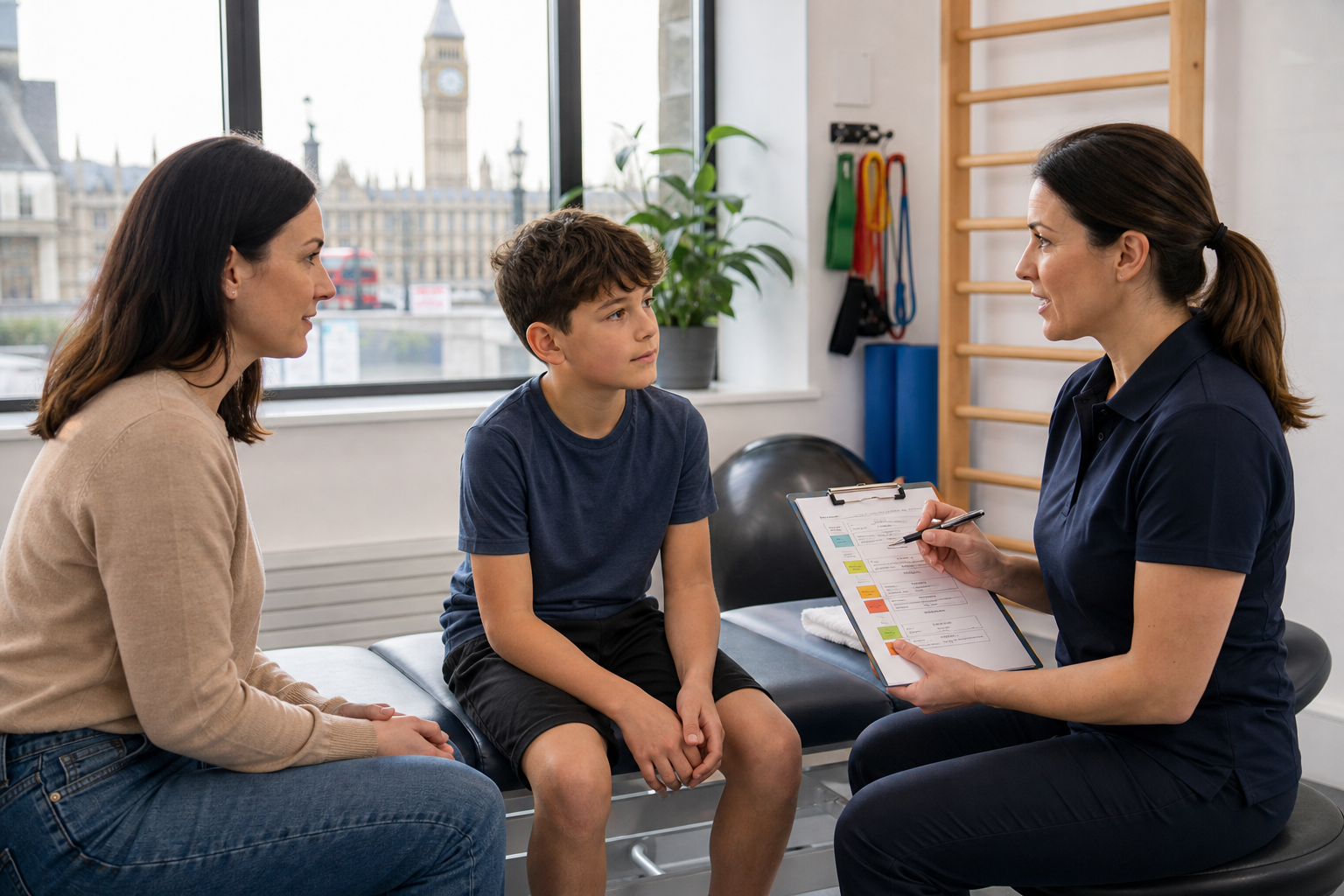
Pediatric Concussion Protocols in London: What Parents Should Know
Pediatric concussion protocols are individualized, symptom-guided plans that help a child recover safely and gradually return to school, daily activities, and sport. They are not one fixed checklist or timetable. The right plan depends on the child’s symptoms, age, activity level, school demands, and progress.
If you are searching for “child concussion what to do” in London, start with safety: stop the activity, tell a trusted adult, ensure the child is supervised, and arrange assessment from a physician or nurse practitioner. Rehabilitation can support recovery and return-to-activity decisions, but it does not replace urgent or medical assessment.
What pediatric concussion protocols mean
A concussion is a brain injury that can temporarily affect how a child thinks, moves, feels, sleeps, or tolerates activity. Pediatric concussion protocols organize decisions around those changes. They may include supervision, symptom monitoring, communication with school staff, gradual activity progression, and follow-up with qualified healthcare professionals.
The word “pediatric” matters because children and teenagers are not simply smaller adults. A younger child may have difficulty describing symptoms, while a teenager may be balancing classes, screens, social activities, organized sport, and pressure to resume normal routines. A useful plan reflects the child’s actual responsibilities and abilities rather than applying the same schedule to everyone.
Foundation Physiotherapy and Rehab describes pediatric concussion recovery as age-specific and tailored to the individual’s age, activity level, and goals. This avoids promising that every child will recover on a predetermined timeline.
What to do first after a suspected concussion

Remove the child from the activity that may have caused the injury. Ontario guidance advises stopping the activity, telling a parent, coach, teacher, or another trusted adult, ensuring the child is not left alone, and arranging assessment by a physician or nurse practitioner.
Do not allow a child to return to play simply because symptoms appear mild, disappear temporarily, or the child wants to continue. A child may not recognize the significance of headache, dizziness, confusion, unusual fatigue, visual changes, or difficulty concentrating. A responsible adult should take the concern seriously and coordinate the next step.
When urgent medical attention is needed
Seek urgent medical attention if symptoms worsen or appear seriously concerning after a possible concussion. Rehabilitation is not emergency assessment, so do not wait for a physiotherapy appointment when the child’s condition raises immediate safety concerns.
Seek professional advice rather than creating a return-to-school or return-to-sport plan alone when symptoms are persistent, changing, difficult to describe, or substantially interfering with normal activities. Tell the assessing healthcare professional what happened, when symptoms began, and how they have changed.
The main recovery decisions parents need to understand
Recovery is not a choice between doing nothing and returning to everything. Families usually need to make smaller, symptom-guided decisions and adjust them as the child responds.
| Decision | More helpful approach | Problem to avoid |
|---|---|---|
| Rest or activity | Use relative rest and gradually reintroduce manageable activity according to symptoms and professional guidance. | Assuming prolonged inactivity is always best, or increasing activity too quickly. |
| Symptom monitoring | Notice patterns during and after schoolwork, screens, movement, and exercise. | Encouraging the child to push through a clear symptom increase. |
| Return to learning | Coordinate with school staff and adjust demands when symptoms affect concentration or stamina. | Expecting an immediate return to a full academic workload. |
| Return to sport | Follow a gradual, supervised process with appropriate medical clearance. | Returning to competition because the child feels better briefly. |
For adolescents, concussion rehab for teens provides practical information about symptom-guided recovery, activity pacing, school accommodations, warning signs, and parental support. Educational information helps families ask better questions, but it is not an individual treatment plan.
How return-to-school planning fits into recovery
School is part of concussion recovery, not an issue to address only after all symptoms disappear. Reading, writing, screen use, classroom noise, travel, physical education, and a full day of social interaction place different demands on a recovering child.
Parents can tell the school what happened and ask how workload, environment, schedule, or breaks might be adjusted while symptoms are assessed. Support will vary. A child who tires after a short period of concentration may need a different plan from a teenager whose main difficulty is noise, visual stimulation, headache, or dizziness.
Progress should be based on how the child tolerates activity during and afterward. If a demand causes a meaningful symptom increase, record the pattern and discuss it with the healthcare professional guiding recovery. The goal is to rebuild tolerance gradually, not to measure success by how much discomfort the child can endure.
How return-to-sport planning differs from return to school
Returning to class and returning to sport involve different risks. School planning focuses largely on cognitive, sensory, emotional, and stamina demands. Sport adds exertion, speed, coordination, contact, falls, and the possibility of another injury.
Ontario’s Rowan’s Law resources state that sport organizations must have removal-from-sport and return-to-sport protocols, while schools should follow their school board’s concussion policy. Ontario guidance also requires appropriate medical clearance before a child returns to sport, even if the child believes they are well.
A child should not move directly from feeling better to full practice or competition. Return-to-sport decisions should be gradual, supervised, and coordinated with the healthcare professionals responsible for assessment and clearance.
Why protocols differ for children and teenagers
Age affects how symptoms are reported, how recovery is supported, and what a return to normal activity looks like. Younger children may need parents and teachers to notice changes in behaviour, play, balance, sleep, or attention. Their plan may need simple explanations, closer observation, and coordination between caregivers and school staff.
Teenagers may need support with school deadlines, independent symptom reporting, online activity, transportation, sport expectations, and social pressure. They may minimize symptoms because they are worried about missing school or competition. Clear, calm communication helps parents support recovery without turning every activity into a test.
What an individualized concussion assessment may consider
Concussion symptoms can involve more than headache. A qualified assessment may consider vestibular symptoms such as dizziness or balance difficulty, visual disturbances, neck-related symptoms, headaches, fatigue, and cognitive difficulty. The pattern helps determine which activities are difficult and what support may be appropriate.
This multi-system view explains why two children with apparently similar injuries may need different plans. One may struggle mainly with classroom concentration, while another may have dizziness with movement or difficulty tolerating visual stimulation.
Parent checklist for the first days and weeks
- Remove the child from activity: Stop play, practice, or another activity after a suspected concussion.
- Tell a responsible adult: Inform a parent, coach, teacher, or another trusted adult and ensure supervision.
- Arrange assessment: Follow Ontario guidance by arranging assessment from a physician or nurse practitioner.
- Record useful details: Note when the injury occurred, what happened, which symptoms appeared, and what changes them.
- Contact the school: Share the concern and ask how learning demands can be coordinated.
- Communicate with coaches: Ensure sport staff understand that the child is not returning to practice or competition until the appropriate process is complete.
- Watch for change: Seek urgent care if symptoms worsen or become seriously concerning.
- Ask about next steps: Clarify who is guiding follow-up and what signs should prompt another assessment.
This checklist supports communication, but it is not a diagnosis, clearance tool, or substitute for medical advice.
Finding pediatric concussion rehabilitation in London
Look for a provider who works with children and teenagers, uses individualized assessment, monitors symptoms, and understands the different demands of school, daily activity, and sport. Ask how rehabilitation fits alongside physician or nurse-practitioner care.
Families seeking concussion rehabilitation in London can find a local option at Foundation Physiotherapy and Rehab. The clinic provides concussion rehabilitation for children, teenagers, and adults, with age-specific programs addressing symptoms, activity level, and goals. Its service information also describes structured return-to-school and return-to-sport planning.
The clinic is located at Unit 100, 540 Wharncliffe Road South in London, Ontario. Families should still arrange appropriate medical assessment for a suspected concussion and use rehabilitation as supportive, individualized care rather than emergency treatment.
Frequently asked questions
How long does pediatric concussion recovery usually take?
There is no single timeline for every child. Symptoms, age, activity demands, and progress affect the plan. Discuss persistent symptoms or difficulties with school, daily life, or sport with a qualified healthcare professional.
Should a child completely avoid screens after a concussion?
Do not assume complete screen avoidance is necessary for every child. Screen use should be considered alongside symptoms and other demands, with activity paced according to professional guidance.
When can a child return to sports after a concussion?
A child should return gradually and only with appropriate medical clearance. Feeling better briefly is not, by itself, clearance to compete.
What should parents do if concussion symptoms worsen?
Seek urgent medical attention when symptoms worsen or appear seriously concerning. Do not wait for rehabilitation when emergency or medical assessment may be needed.
Can physiotherapy help with a child’s return to school and sport?
Individualized pediatric concussion rehabilitation may help assess relevant symptoms, monitor tolerance, and support structured return-to-school or return-to-sport planning. It does not replace medical assessment, emergency care, or required clearance.
Conclusion: Choose safety, assessment, and gradual progression
Pediatric concussion protocols are flexible, symptom-guided recovery plans. After a suspected concussion, remove the child from activity, involve a trusted adult, arrange qualified assessment, and watch for worsening or seriously concerning symptoms. Return to school and return to sport should be planned separately and adjusted to the child’s response.
If ongoing symptoms or return-to-activity decisions require additional support, individualized rehabilitation can connect assessment findings with practical next steps. For local concussion rehabilitation for children and teenagers, contact Foundation Physiotherapy and Rehab in London, Ontario, while following the child’s medical care team.