
Pelvic Floor Physiotherapy for Pelvic Organ Prolapse: What to Expect and When It May Help
Pelvic floor physiotherapy can be part of conservative care for pelvic organ prolapse, but it is not a universal cure or a substitute for medical assessment. The appropriate plan depends on your symptoms, pelvic floor function, daily activities, goals, and whether gynecologic, urogynecologic, urologic, or other medical review is also needed.
A careful assessment can help determine whether the priority is strengthening, coordination, relaxation, pressure management, movement education, symptom support, or referral for additional care. The goal is to make a safe, informed next-step decision rather than begin exercises based only on a general description of prolapse.
Key Takeaways
- Pelvic organ prolapse can cause symptoms like heaviness, pressure, or discomfort, but these symptoms require professional assessment for accurate diagnosis.
- Pelvic floor physiotherapy focuses on individualized treatment plans that may include strengthening, coordination, and relaxation techniques.
- Not all patients will benefit from the same exercises; a tailored approach is essential for effective treatment.
- Consultation with a qualified healthcare professional is crucial if symptoms worsen or do not improve with conservative care.
- Foundation Physiotherapy and Rehab offers a complimentary consultation to help patients determine the best course of action.
Quick summary

- Pelvic organ prolapse may feel like pelvic heaviness, pressure, bulging, discomfort, or changes in bladder or bowel function, but symptoms alone cannot identify its cause or stage.
- Pelvic floor physiotherapy may address muscle strength, timing, coordination, relaxation, breathing, movement habits, and symptom management.
- Strengthening exercises are not automatically appropriate for everyone. Overactive or poorly coordinated muscles may require a different approach.
- A pelvic health assessment should include consent, privacy, clear explanations, and a plan connected to your goals. An internal examination is not automatically required.
- Worsening symptoms, significant pain, bleeding, urinary retention, neurological symptoms, or concerns that are not improving should be discussed with an appropriate medical professional.
What pelvic organ prolapse can feel like
Pelvic organ prolapse occurs when structures in the pelvis are no longer supported in the same way. It can contribute to sensations such as heaviness, pressure, or bulging. Some people notice symptoms mainly after standing, lifting, exercising, or spending a long time on their feet. Others experience discomfort, difficulty emptying the bladder or bowel, or changes in sexual comfort.
These symptoms can have several possible explanations, and symptom intensity does not always correspond neatly to clinical findings. A sensation of pressure does not by itself confirm prolapse, while a diagnosed prolapse may cause little or no discomfort. Avoid trying to determine the stage or prescribe your own treatment from symptoms alone.
For individualized assessment and treatment options, pelvic health physiotherapy can address pelvic floor dysfunction, incontinence, pelvic pain, and pelvic organ prolapse as part of a broader care plan.
How pelvic floor physiotherapy may fit into prolapse care

A pelvic health physiotherapist may assess how the pelvic floor muscles contract, relax, and coordinate with breathing and movement. Treatment may also consider how you manage pressure during coughing, lifting, exercise, transfers, and daily activities.
Depending on the findings, care may include education, movement modification, relaxation strategies, breathing practice, coordination training, progressive strengthening, or a tailored home program. The focus is not necessarily to make the pelvic floor stronger at all costs. If muscles are already tense, painful, or difficult to relax, repeated squeezing may aggravate symptoms rather than help.
Foundation Physiotherapy and Rehab describes its pelvic health process as personalized and discreet. Its service information states that assessment includes a detailed history, discussion of symptoms, and a physical assessment of pelvic floor function when appropriate. Treatment plans are adjusted as patients progress rather than applied as a fixed template.
Prolapse symptoms and possible next steps
The table below is a discussion aid, not a diagnostic tool. Your symptoms may fit more than one row, and the appropriate next step may involve both physiotherapy and medical care.
| Symptom pattern or concern | What to discuss | Possible next step |
|---|---|---|
| Heaviness or pressure that appears with activity | Which activities trigger it, whether symptoms settle with rest, and how pressure is managed during movement | Arrange a pelvic health assessment to review coordination, breathing, movement habits, and activity modification |
| A feeling of bulging or new pelvic pressure | When it began, whether it is worsening, and whether it affects bladder, bowel, sexual, or daily function | Discuss it with a medical professional and pelvic health physiotherapist rather than relying on self-directed exercises |
| Pelvic pain, tension, or difficulty relaxing | Whether symptoms increase with sitting, intercourse, bowel movements, exercise, or attempted contractions | Seek an assessment that considers relaxation and coordination, not strengthening alone |
| Urinary or bowel changes | Leakage, urgency, incomplete emptying, constipation, straining, or changes in usual function | Discuss the changes with an appropriate healthcare professional and ask whether pelvic health physiotherapy is suitable |
| Symptoms interfering with work, exercise, caregiving, or daily activities | Your practical goals and which tasks are most limited | Consider structured rehabilitation with measurable goals and planned follow-up |
What to expect at a pelvic health physiotherapy assessment
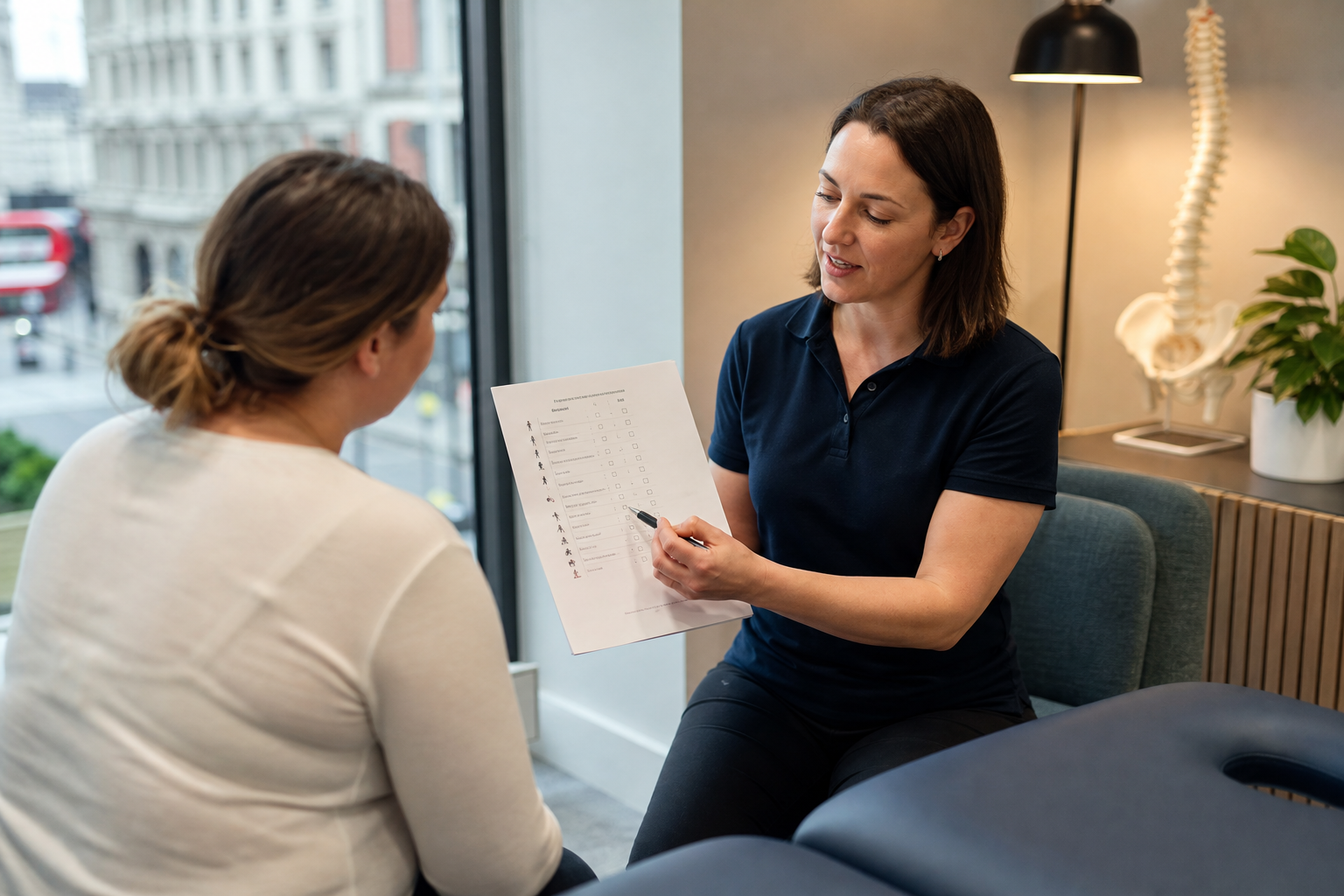
Your first appointment should begin with a conversation, not an assumption about which exercise you need. The physiotherapist may ask about symptom onset, triggers, bladder and bowel function where relevant, previous pregnancies or procedures, medical history, activity levels, and the tasks you want to resume.
The clinician should explain available examination options and why a particular assessment may be useful. A physical assessment may involve observing movement, breathing, posture, abdominal or hip function, and pelvic floor function. An internal assessment is not automatically required. If it is suggested, you should receive an explanation, have the opportunity to ask questions, and be able to give or withhold consent.
After the assessment, ask what the findings mean in plain language, which options are available, and how progress will be measured. A useful plan should identify realistic goals, explain what to do between visits, and include a point at which the approach will be reviewed or changed.
Treatment options and tradeoffs to discuss
Supervised pelvic floor physiotherapy
Individual physiotherapy can provide assessment, education, exercise instruction, and feedback that are difficult to obtain from generic online advice. It also allows the plan to change if symptoms respond differently than expected. The tradeoff is the time, appointment commitment, and possible out-of-pocket cost associated with ongoing care.
Education and home rehabilitation
Home exercises and movement strategies can support progress between appointments when they are linked to your assessment and explained clearly. They require consistent practice and may need adjustment if pressure, pain, urinary symptoms, or other concerns increase. Unsupervised Kegels are not a reliable solution for every person with prolapse.
Medical or specialist assessment
A physician, gynecologist, urogynecologist, urologist, obstetric provider, or another appropriate professional may need to assess the diagnosis, contributing factors, or treatment options. Medical review does not rule out physiotherapy. In some cases, coordinated care provides a clearer plan than either service alone.
Adjunctive treatment
Some clinics may discuss additional tools or modalities alongside individualized rehabilitation. Ask what problem the option is intended to address, what expected benefit supports it, what alternatives exist, and how you will know whether it is helping.
Where B-Pulse chair therapy may fit
B-Pulse chair therapy is described by Foundation Physiotherapy and Rehab as a non-invasive pelvic floor and neuromuscular stimulation option. It may be discussed as one part of care after the clinician understands your symptoms and goals. It should not be presented as a universal treatment for prolapse or as a replacement for pelvic floor physiotherapy or medical care.
Before considering it, ask:
- What specific symptom or functional goal is this intended to address?
- How does it compare with supervised exercise, education, biofeedback, or other options?
- Are there health conditions, implants, pregnancy-related considerations, or other factors that affect suitability?
- How many sessions are suggested, what is the expected cost, and when will progress be reassessed?
- What happens if symptoms do not improve or become worse?
When to seek medical or specialist input
Pelvic health physiotherapy does not replace gynecologic, urogynecologic, urologic, obstetric, or other medical assessment when those services are needed. Seek prompt professional discussion about a new or worsening bulge, significant or unexplained pelvic pain, bleeding, difficulty emptying the bladder, recurrent urinary concerns, neurological symptoms, or symptoms substantially affecting daily life.
You should also ask for a review if an appropriate period of conservative care is not helping, if exercises consistently increase pressure or pain, or if the working explanation for your symptoms remains unclear. A physiotherapist should be willing to recommend referral when a concern falls outside the scope of physiotherapy.
How to choose a pelvic floor physiotherapy provider
Look for a provider who can explain how pelvic organ prolapse fits within their pelvic health practice and how treatment decisions are made. Before beginning care, look for a thorough pelvic health assessment that considers your symptoms, medical history, goals, and comfort with the examination process.
- Do you regularly assess pelvic floor dysfunction and pelvic organ prolapse?
- How will you distinguish between weakness, poor coordination, muscle overactivity, and symptoms needing medical review?
- What examination options are available, and how is consent handled?
- How will privacy, communication, and the option to pause or stop be managed?
- How will progress be measured, and when will the plan be reassessed?
- How do you communicate with or refer to physicians and specialists when needed?
- What should I do if home exercises increase symptoms?
How to prepare for your first appointment
Write down when symptoms occur and what seems to trigger or relieve them. Note any pressure, bulging, pain, leakage, urgency, bowel changes, or difficulty with activities such as lifting, walking, running, coughing, or intercourse.
Bring relevant information about previous surgeries, childbirth, diagnoses, procedures, medications, and other healthcare providers. Identify one or two functional goals, such as exercising comfortably, working without pressure, caring for a child, or reducing leakage during a specific activity.
Prepare questions about examination choices, consent, expected follow-up, costs, home care, and referral pathways. You do not need to agree to an examination or treatment before understanding why it is being suggested.
Considering pelvic floor physiotherapy in London, Ontario
Foundation Physiotherapy and Rehab provides personalized, discreet pelvic health physiotherapy in London, Ontario, including care related to pelvic floor dysfunction, incontinence, pelvic pain, pelvic organ prolapse, and prenatal or postnatal recovery. The clinic describes its care as one-on-one and evidence-based, with treatment plans tailored to individual needs.
Located at Unit 100, 540 Wharncliffe Road South, the clinic offers a complimentary 10–15 minute consultation for prospective patients seeking direction before beginning treatment. This can be an opportunity to explain your concern, ask about assessment and consent, and clarify whether physiotherapy, medical review, or combined care is the sensible next step.
Frequently asked questions
Can pelvic floor physiotherapy reverse pelvic organ prolapse?
It cannot be promised to reverse every prolapse. Physiotherapy may help address muscle function, pressure management, movement strategies, and symptoms, but its role depends on the individual assessment and broader medical context.
Do I need an internal examination?
Not automatically. An internal examination may be considered if it would provide useful information and you consent, but assessment can also involve history, symptom discussion, movement, breathing, and external examination.
Should I see a doctor first?
That depends on your symptoms, diagnosis, and medical history. A new or worsening bulge, significant pain, bleeding, urinary retention, neurological symptoms, or unclear diagnosis warrants medical discussion. Physiotherapy and medical care may be coordinated.
What if exercises worsen pressure or pain?
Stop treating the exercise as automatically appropriate and contact a qualified healthcare professional for review. The plan may need to consider relaxation, coordination, breathing, technique, activity load, or another cause.
Can B-Pulse chair therapy replace physiotherapy?
No. It is an adjunctive, non-invasive stimulation option that may be discussed after assessment. It should not replace individualized physiotherapy, medical care, or reassessment.
What should I bring?
Bring a list of symptoms and triggers, relevant medical or surgical history, medication information, previous treatment details, and your main activity goals. Prepare questions about consent, examination options, home care, progress measures, and referral.
Conclusion: choose assessment before assumptions
Pelvic floor physiotherapy may be a useful part of conservative pelvic organ prolapse care, but the right approach is determined by your symptoms, pelvic floor function, goals, comfort, and medical needs. Strengthening may help some people, while others may need more attention to coordination, relaxation, pressure management, movement, or specialist assessment.
If you are unsure where to begin, arrange a pelvic health assessment or discuss your symptoms with an appropriate medical professional. In London, Ontario, Foundation Physiotherapy and Rehab offers one-on-one pelvic health care and a complimentary 10–15 minute consultation to help prospective patients clarify their next step.