
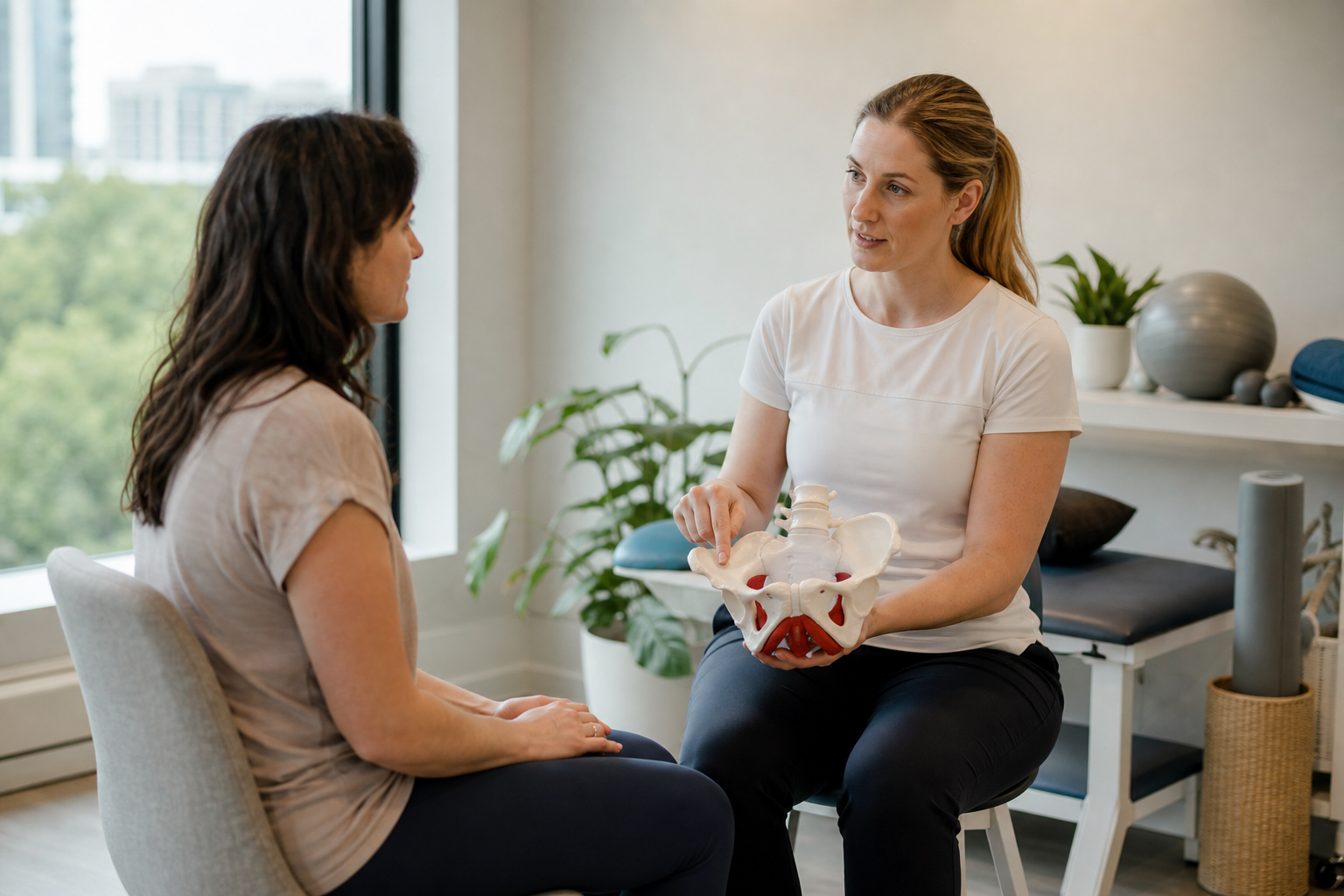
Which Pelvic Pain Physiotherapy Approach Fits Your Symptoms?
There is no single pelvic pain physiotherapy approach that suits everyone. The right plan depends on what may be contributing to your symptoms, how your muscles and movement respond, your goals, and what feels comfortable during assessment.
Pelvic pain can involve pelvic floor dysfunction, myofascial pain, referred pain from the hip or back, or neurological contributors. Physiotherapy can help assess these patterns and guide conservative care, but symptoms alone cannot confirm a diagnosis. This information is educational and is not a substitute for individualized medical advice.
Key Takeaways
- Pelvic pain may have several contributing factors, so treatment should begin with assessment rather than a preset exercise program.
- Approaches may include education, breathing and relaxation, manual therapy, pelvic floor retraining, biofeedback, graded movement, and tailored exercise.
- Strengthening is not automatically the answer. Some people may first need improved relaxation, coordination, or confidence with movement.
- Stimulation and B-Pulse chair therapy may support pelvic floor training for appropriate patients, but they are generally adjuncts rather than standalone solutions.
- Persistent, worsening, unexplained, or concerning symptoms should be discussed with an appropriate healthcare professional.
Why assessment comes before choosing a treatment approach
Pelvic pain is a symptom, not a single condition. It may be related to muscle tension, difficulty coordinating the pelvic floor, sensitivity in surrounding tissues, movement patterns involving the hip or back, or factors requiring assessment beyond physiotherapy.
A pelvic health assessment builds a clearer picture of symptoms, movement, muscle behaviour, daily limitations, and personal goals. It should also include a discussion of consent and comfort. Internal or external techniques should be explained before they are considered, and you should be able to ask questions or decline an approach.
Foundation Physiotherapy and Rehab describes pelvic health care as a thorough assessment followed by personalized treatment that may include manual therapy, pelvic floor muscle retraining, biofeedback, exercise, and relaxation techniques. Treatment should be guided by assessment findings, symptoms, and goals rather than pain location or intensity alone.
Pelvic pain physiotherapy approaches at a glance

These approaches may form part of a broader plan. They are not interchangeable, and none is automatically suitable for every person.
| Approach | What it may involve | Important consideration |
|---|---|---|
| Education and pain guidance | Plain-language explanations, symptom monitoring, pacing, and practical activity strategies. | Education should support informed decisions, not dismiss or oversimplify pain. |
| Relaxation and breathing | Breath work, awareness, and strategies that may reduce guarding or unnecessary muscle tension. | Relaxation may be more appropriate initially than strengthening when muscle overactivity is suspected. |
| Manual therapy | Hands-on treatment directed at relevant muscle, soft-tissue, or movement findings. | It should have a clear purpose, be explained in advance, and support an active plan when appropriate. |
| Pelvic floor retraining | Practice with coordination, control, relaxation, or strength based on assessment findings. | There is no universal pelvic floor exercise. The goal may be to release, contract, coordinate, or improve awareness. |
| Biofeedback | Information that helps you understand muscle activity or improve control and coordination. | Biofeedback is a tool, not a diagnosis or guarantee of improvement. |
| Graded movement | A gradual return to meaningful activities while monitoring response and building confidence. | Progress should avoid both doing too much too quickly and avoiding movement entirely. |
| Tailored exercise | Individualized exercises for mobility, strength, endurance, coordination, or functional goals. | Exercises should be adjusted when symptoms, ability, or goals change. |
Education, relaxation, and breathing strategies
Understanding what may influence your symptoms can make treatment decisions less confusing. A physiotherapist may discuss symptom patterns, activity tolerance, posture, breathing, pacing, and ways to modify a task without stopping all movement.
Relaxation and breathing strategies may be considered when the pelvic floor or surrounding muscles appear tense, guarded, or poorly coordinated. This does not mean pain is “just stress.” It recognizes that muscle behaviour, breathing, sensitivity, and movement can interact. Instructions should be specific to your findings instead of telling every patient to relax or strengthen.
Manual therapy and pelvic floor muscle retraining
Manual therapy uses hands-on techniques to address relevant findings identified during assessment. Treatment may focus on muscles or soft tissues in the pelvic region or related areas such as the hip and lower back. Hands-on care may support movement or exercise, but it should not be treated as the only component of rehabilitation.
Pelvic floor retraining is active and may involve learning when to contract, release, coordinate, or sustain muscle activity. Someone with reduced control may need a different strategy from someone whose muscles are overactive or painful. Repeating generic strengthening exercises can be unhelpful when the underlying pattern is unclear.
Consent is especially important in pelvic health care. A good provider explains what a technique is intended to address, offers alternatives where appropriate, and checks your comfort throughout the session.
Biofeedback, tailored exercise, and graded movement
Biofeedback can provide information about muscle activity or coordination, helping some patients connect what they feel with what their muscles are doing. It may be useful when awareness or control is difficult, but it does not replace clinical reasoning or broader assessment.
Tailored exercise may address mobility, coordination, strength, endurance, or a specific activity that matters to you. Graded movement can help when pain has made normal activities feel uncertain. The aim is not to force through symptoms, but to choose a manageable starting point, observe your response, and progress or modify the plan as needed.
A useful plan should explain what to do between appointments, how much is reasonable, and what signals mean the exercise needs to change. Progress may involve improved function, confidence, tolerance, or symptom control, not just a lower pain score.
Where stimulation and B-Pulse chair therapy may fit
Pelvic floor stimulation options may include supervised electrical stimulation, biofeedback, seat-based systems such as B-Pulse, or home stimulators. These options are not automatically appropriate for everyone. Selection should consider symptoms, assessment findings, comfort, and goals.
Stimulation is generally an adjunct to pelvic floor muscle training rather than a replacement for learning how to coordinate and use the muscles. Ask what the treatment is intended to do, how it fits with active rehabilitation, how progress will be reviewed, and what alternatives are available.
How the plan may change as you progress
Pelvic pain rehabilitation involves making and testing informed decisions. A plan may begin with clarifying goals, identifying aggravating activities, and addressing education, breathing, relaxation, or symptom management. Manual therapy, retraining, biofeedback, movement, or exercise may then be added when assessment supports them.
As your response becomes clearer, the physiotherapist may progress an exercise, change the dose, introduce a functional activity, or reconsider the original emphasis. A changing plan is not necessarily a sign that treatment has failed. It may reflect useful information about what your body tolerates and what supports your goals.
When pelvic pain needs broader medical assessment
Physiotherapy can be one part of care, but it should not be used to explain every pelvic pain presentation. Speak with an appropriate healthcare professional if pain is persistent, worsening, unexplained, or concerning to you, particularly when the pattern does not fit the working treatment plan or is accompanied by other symptoms requiring medical review.
A physiotherapist should recommend coordination with another provider when assessment suggests additional evaluation is appropriate. A broader clinical picture matters because pelvic pain can involve pelvic floor, myofascial, hip, back, or neurological contributors.
What to look for when choosing a pelvic pain physiotherapist in London
- Assessment quality: Ask how the provider will understand your symptoms, movement, muscle behaviour, and daily goals.
- Personalization: Look for a plan that explains why an approach is recommended and how it can be adjusted.
- Consent and comfort: Internal and external techniques should be explained beforehand, with your consent and the option to discuss alternatives.
- Active support: Ask how education, home strategies, movement, or exercises fit alongside hands-on care.
- Progress review: The provider should explain how you will judge whether an approach is helping and when the plan may change.
- Communication: You should feel able to discuss pain, uncertainty, and sensitive symptoms without being rushed or dismissed.
- Coordination: Ask what happens if your symptoms suggest another healthcare professional should be involved.
For London residents, location matters, but it should not outweigh assessment quality and communication. A provider should describe pelvic health care clearly and connect treatment choices to your goals.
Questions to ask before booking
- What will the first pelvic health assessment involve?
- How will you decide whether I need relaxation, strengthening, coordination work, or another approach?
- Are internal techniques optional, and will they be explained first?
- How might manual therapy, exercise, biofeedback, or breathing strategies fit together?
- How will we measure progress beyond pain intensity?
- What should I do if an exercise increases my symptoms?
- What happens if my symptoms suggest a hip, back, neurological, or other contributor?
- Where would stimulation or B-Pulse chair therapy fit, if appropriate?
Frequently asked questions
Can pelvic floor physiotherapy help if the cause of pelvic pain is unclear?
It may help clarify contributing movement and muscle factors and identify conservative options, but it cannot replace medical assessment when symptoms are unexplained or concerning. A qualified provider should explain what physiotherapy can address and when coordination with another professional is appropriate.
Does pelvic pain physiotherapy always involve an internal examination?
No. Techniques should not proceed without informed consent. Ask what the assessment involves, why a technique is being considered, and what alternatives are available.
Should pelvic pain be treated with strengthening or relaxation exercises?
That depends on the assessment. Some people may need improved relaxation or coordination, while others may benefit from strengthening or endurance work.
Is B-Pulse chair therapy a replacement for pelvic floor exercises?
It is generally an adjunct to pelvic floor muscle training, not an automatic replacement for active rehabilitation. Ask how it would fit into your individualized plan.
How long does it take to know whether treatment is helping?
There is no universal timeline. Your provider should identify meaningful signs of progress, such as improved activity tolerance, coordination, confidence, or symptom control, and review the plan if your response is not as expected.
Choosing your next step
The most appropriate pelvic pain physiotherapy approach is matched to your assessment findings, symptoms, comfort, and goals. Education, relaxation, manual therapy, pelvic floor retraining, biofeedback, graded movement, tailored exercise, and stimulation may each have a place, but the combination should be individualized and reviewed over time.
If you are in London, Ontario and want to discuss whether pelvic health physiotherapy is appropriate, Foundation Physiotherapy and Rehab offers a complimentary 10–15 minute consultation for prospective patients.