
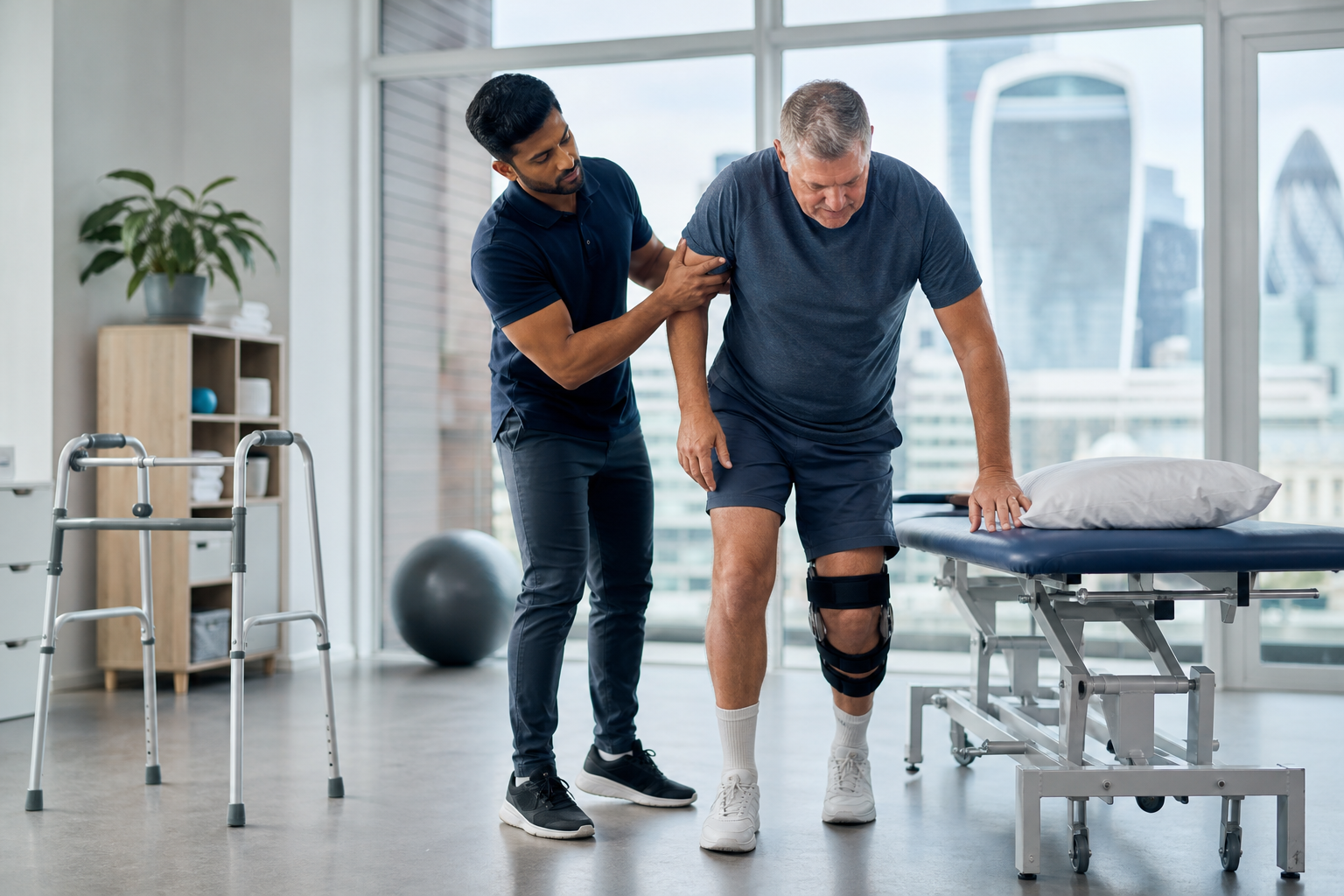
Post-Surgical Recovery Exercises: How to Progress Safely After Surgery
Post-surgical recovery exercises should not come from a universal online list. The safest plan depends on the operation, tissue healing, medical restrictions, symptoms, current mobility, and the activities you need to resume. Your surgeon or care team should clarify what is permitted before you begin or progress exercise.
A useful way to think about rehabilitation is as a gradual progression: protected movement, basic mobility, improved movement control, strength and tolerance, then a return to meaningful daily, work, exercise, or sport activities. These are educational stages, not a personal protocol. The right pace and exercise selection must be adjusted to your surgery and recovery.
Key Takeaways
- Post-surgical recovery exercises should be tailored to individual needs and surgical specifics.
- Consult with your medical team before starting or progressing any exercise.
- Understanding the stages of recovery can help set realistic expectations.
- Individualized physiotherapy can significantly enhance recovery outcomes.
- Government funding for physiotherapy may be available for eligible residents in Ontario.
Why Post-Surgical Exercises Cannot Be One-Size-Fits-All
A joint replacement, abdominal procedure, pelvic operation, spinal surgery, and soft-tissue repair can involve very different healing demands. Weight-bearing, lifting, bending, twisting, range of motion, wound care, and driving restrictions may all vary. Even two people having the same procedure may progress differently because of age, general health, previous activity, pain, balance, home setup, and complications.
That is why a generic list of post-surgical recovery exercises can be misleading. It may encourage a movement that is restricted for your procedure, overlook an important symptom, or make you believe that discomfort should simply be pushed through. General education can help you understand the process, but it cannot replace instructions from the professionals managing your surgery.
What Determines Which Exercises Are Appropriate?

Before choosing an exercise, ask what it is intended to improve and whether it fits your current restrictions. The following factors commonly change the plan:
| Factor | Why it matters |
|---|---|
| Type and location of surgery | The repaired tissue, joint, organ, or muscle may have specific movement or loading precautions. |
| Healing and wound status | Exercise may need to be modified while tissue is healing or if the wound requires further review. |
| Weight-bearing or lifting limits | These restrictions determine which transfers, walking tasks, strengthening exercises, and household activities are appropriate. |
| Pain and swelling | Your response during and after activity helps the care team judge whether the current level is tolerable. |
| Balance and mobility | You may need support, equipment, or supervision before attempting more demanding movement. |
| Medical conditions or complications | Other health factors can affect fatigue, breathing, circulation, balance, and exercise tolerance. |
| Functional goals | Exercises should eventually relate to the activities you need to perform at home, work, school, or during recreation. |
The General Progression of Post-Surgical Recovery Exercises
Rehabilitation does not always move in a straight line. A person may advance in walking but need to hold steady with strengthening, or improve range of motion while still requiring restrictions on lifting. Progress is based on the whole picture rather than one measure alone.
1. Protected Movement and Circulation
Early rehabilitation may focus on the movement and positioning that your surgical team has permitted. Depending on the procedure, this can include comfortable changes of position, breathing strategies, gentle movement of unaffected areas, circulation-focused activity, or carefully supported mobility.
The goal is not to test the repair or force a stretch. Early movement should respect wound and tissue healing, pain limits, equipment needs, and any instructions about getting out of bed, walking, bending, or lifting. Ask your care team exactly what “gentle movement” means for your operation.
2. Basic Mobility and Daily Function
Once cleared, rehabilitation may address practical tasks such as rolling, sitting, standing, transfers, walking, stairs, or moving safely around your home. These tasks are often more useful than isolated exercises when your immediate concern is getting to the bathroom, preparing a meal, or managing a set of stairs.
An assessment can consider your balance, strength, symptoms, walking aid, home layout, and the help available to you. Foundation Physiotherapy and Rehab describes its orthopedic and musculoskeletal physiotherapy service as supporting post-surgical rehabilitation and movement recovery, with care shaped around individual needs.
3. Restoring Range of Motion and Movement Control
Restoring movement does not mean forcing a joint or healing tissue through its full range. The appropriate target may be limited temporarily by the operation, and pushing beyond a restriction can be counterproductive.
At this stage, the focus may include controlled movement, coordination, posture, and the quality of a task. Your symptoms during the activity and later that day can help determine whether the exercise is appropriate. A physiotherapist can help distinguish a manageable response from a reason to modify the plan or seek review.
4. Rebuilding Strength and Tolerance
Strengthening and conditioning are introduced when healing and medical restrictions allow. The starting point depends on what muscles and tissues were affected, how much load you can safely tolerate, and how symptoms respond. A plan may need to change if pain, swelling, fatigue, or movement quality deteriorates.
Progression is more than adding resistance. It may involve improving control, increasing the time you can perform an activity, reducing reliance on support, or completing a household task with less fatigue. Foundation’s functional rehabilitation offering includes programs related to function, conditioning, return to work, and resilience, but your specific plan still requires assessment.
5. Returning to Work, Exercise, and Everyday Activities
Later-stage post-operative rehabilitation should reflect your actual demands. Someone returning to desk work may need a different progression from someone who lifts, climbs, stands for long periods, drives, performs repetitive tasks, or plays a sport.
Discuss the movements and loads that matter most to you. A useful plan connects exercises to those goals while respecting restrictions and monitoring your response. Returning to an activity is not simply a decision to resume it at full intensity. It is usually a process of rebuilding capacity in manageable steps.
Questions to Ask Before Starting or Progressing Exercises
Take these questions to your surgeon, physician, physiotherapist, or other member of your care team:
- What movement, weight-bearing, lifting, bending, or twisting is permitted at this stage?
- Which symptoms are expected, and which should prompt a call or reassessment?
- How should I modify an exercise if it increases pain, swelling, fatigue, or difficulty with movement?
- What equipment, support, or supervision do I need for walking and transfers?
- How will we decide when I am ready to progress?
- Which activities at home or work should my exercises prepare me for?
- When should my plan be reviewed?
- Are there restrictions that apply even if I feel capable of doing more?
Clear answers matter because feeling better does not necessarily mean that healing is complete. Conversely, needing a slower progression does not mean that rehabilitation is failing. The plan should reflect both medical safety and your functional priorities.
When to Pause and Contact Your Care Team
Pause an exercise and ask for guidance if your instructions are unclear, a movement conflicts with your surgical restrictions, or your symptoms change unexpectedly. Also seek review if pain or swelling is worsening rather than settling, a task becomes newly difficult, or you are concerned about the surgical area.
Do not diagnose the cause yourself or use a generic exercise routine to manage a concerning change. Contact the surgical or medical team responsible for your care and follow their directions. If you were given written discharge instructions, keep them available for appointments and compare any home program with those instructions.
How Individualized Post-Operative Physiotherapy Can Help
Individualized physiotherapy can help translate medical restrictions into practical movement goals. Assessment may consider your surgical history, current symptoms, mobility, strength, balance, home environment, work demands, and the activities you want to resume. The plan can then be adjusted as your response and function change.
Foundation Physiotherapy and Rehab describes a one-on-one, evidence-based approach that begins with a thorough individualized assessment and builds treatment around each patient’s goals. Its London clinic offers orthopedic and musculoskeletal physiotherapy for post-surgical rehabilitation and functional rehabilitation related to function, conditioning, and return to work.
This type of care does not replace surgical follow-up or guarantee a particular recovery timeline. Its value is helping you understand what to do now, what to monitor, and how to progress when a standard online list cannot account for your procedure or circumstances.
Could Post-Operative Physiotherapy Be Government Funded in Ontario?
Some Ontario residents may qualify for government-funded physiotherapy after surgery, but eligibility is not automatic. Ontario’s official information states that a person with a valid Ontario health card may qualify after an overnight hospital stay or an outpatient or day-surgery procedure within the previous 12 months, where the condition requires physiotherapy. The program includes assessment and treatment of post-operative rehabilitation, subject to its requirements. Check the Ontario government’s physiotherapy funding information for current eligibility details.
If you are unsure whether you qualify, ask the hospital, surgical team, or physiotherapy clinic what documentation and referral details may be needed. Funding rules and available services should be confirmed directly rather than assumed from the fact that surgery occurred.
A Practical Next Step in London, Ontario
If you are recovering in London and want help interpreting your permitted activity, an assessment-based physiotherapy appointment may be a useful next step. Foundation Physiotherapy and Rehab offers orthopedic and musculoskeletal physiotherapy and functional rehabilitation in a one-on-one setting. The clinic is located at Unit 100, 540 Wharncliffe Road South, and offers a complimentary 10 to 15 minute consultation for prospective patients seeking direction before beginning care.
Bring your surgical instructions, medication or activity restrictions, list of concerns, and the tasks you want to regain. That information can make the conversation more specific and help determine whether physiotherapy is appropriate for your current stage.
Frequently Asked Questions
When should I start post-surgical recovery exercises?
Start only with movement or exercise that your surgical or medical team has cleared. The timing varies by procedure, healing, complications, and your health. Early activity may be limited to protected movement or basic mobility, while strengthening and more demanding tasks may wait until later review.
Are online post-surgery exercise lists safe to follow?
They are not automatically safe because they cannot account for your procedure, restrictions, wound healing, symptoms, or equipment needs. Use general information to prepare questions, not as a substitute for surgery-specific instructions or an individualized assessment.
How do I know when to progress my post-operative exercises?
Progress when your care team confirms that healing and restrictions allow it, and when your symptoms, movement quality, strength, and daily function support the change. A progression may involve better control or tolerance rather than simply more repetitions or resistance.
What should I do if my exercise instructions are unclear?
Pause the activity in question and contact the surgeon, physician, physiotherapist, or discharge team who can clarify it. Do not guess at weight-bearing, lifting, range-of-motion, or pain rules, especially when the exercise conflicts with written instructions.
Can physiotherapy help with post-surgical recovery in London, Ontario?
It may help connect your surgical restrictions, symptoms, mobility, and functional goals to an adjustable rehabilitation plan. Foundation Physiotherapy and Rehab provides one-on-one orthopedic and musculoskeletal physiotherapy and functional rehabilitation in London, Ontario. Suitability depends on your surgery and current medical guidance.
Can post-operative physiotherapy be government funded in Ontario?
Some people may qualify if they have a valid Ontario health card, had an overnight hospital stay or outpatient or day surgery within the previous 12 months, and have a condition requiring physiotherapy. Requirements apply, so confirm your eligibility through the Ontario government and the relevant care providers.
Conclusion
The safest approach to post-surgical recovery exercises is clearance-led and individualized. Begin with what your surgical team permits, progress from protected movement toward mobility, control, strength, and real-life activity, and use symptoms and function to guide review rather than relying on a fixed timeline.
When instructions do not answer your practical questions, or when you need help connecting rehabilitation to home, work, or daily activities, an assessment can provide a clearer next step. For one-on-one post-surgical rehabilitation guidance in London, Ontario, contact Foundation Physiotherapy and Rehab to learn about the clinic’s services and complimentary consultation.