
What Should You Ask Before Choosing TMJ Physiotherapy in London?
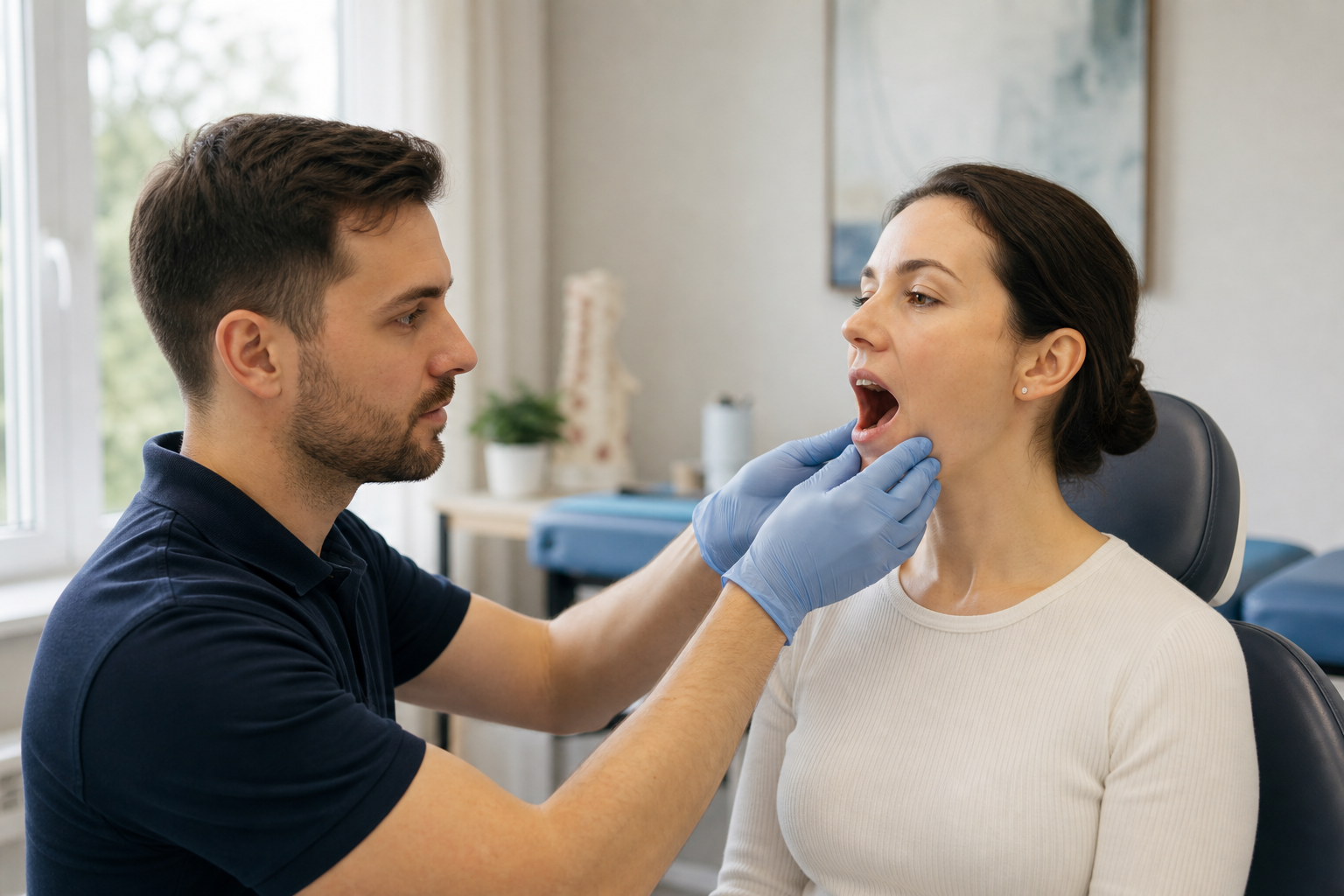
Choosing TMJ physiotherapy in London should begin with a careful assessment, not a preselected technique. Jaw pain, clicking, headaches, teeth grinding, neck tension, and difficulty eating or speaking can have different contributing factors, so the right plan depends on your symptoms, movement, habits, and goals.
Before booking, ask how the physiotherapist will evaluate your jaw and neck, explain treatment choices, review home care, measure progress, and identify when dental or medical input may also be appropriate.
Key Takeaways
- A comprehensive TMJ assessment should include jaw movement, muscle tension, neck function, and daily limitations.
- Personalized treatment plans should be based on assessment findings rather than a one-size-fits-all approach.
- Progress should be monitored through specific metrics, not just pain levels.
- Severe symptoms may require additional dental or medical evaluations.
- A brief consultation can provide clarity on next steps but is not a substitute for a full assessment.
Quick summary

- A useful TMJ assessment should consider jaw movement, muscle tension, neck function, habits, and daily limitations.
- Exercises, education, manual therapy, and adjunctive options should follow assessment findings rather than a universal formula.
- Ask how progress will be monitored and what happens if symptoms worsen or fail to improve.
- Severe, unusual, or urgent symptoms may require dental, medical, or emergency assessment.
- A brief consultation can clarify next steps, but it is not a full clinical assessment.
1. Will the assessment look beyond the jaw joint?
Ask, “What will you assess besides the place where I feel pain?” Jaw physiotherapy may involve examining how the mouth opens and closes, whether movement is limited, and how the surrounding muscles respond. The assessment may also consider the cervical spine, neck function, headaches, clenching, grinding, sleep position, posture, and activities that increase symptoms.
The jaw and neck share muscles and nerve pathways. That does not mean every headache or neck symptom comes from the jaw, but it does mean the broader pattern deserves attention. A useful assessment should relate its findings to practical concerns such as chewing, speaking, yawning, sleeping, or returning to normal activities.
Clicking alone does not establish a diagnosis or determine whether treatment is needed. Ask how clicking will be interpreted alongside pain, restricted movement, locking, function, and your goals.
2. What would treatment involve, and why?

Ask, “Which parts of the plan are you recommending for my findings, and what is each intended to do?” This encourages a rationale-based discussion instead of a promise that one technique will solve every TMJ problem.
| Possible treatment element | What to clarify |
|---|---|
| Education and self-management | Which habits, activities, positions, or foods may increase strain? |
| Mobility or strengthening exercises | What movement or control goal does each exercise address? |
| Manual therapy or muscle release | Which area is being treated, and how will discomfort be managed? |
| Jaw and neck care | How are the jaw, cervical spine, posture, and muscle tension considered together? |
| Acupuncture or dry needling | Why might this optional adjunct fit your presentation? |
Education, exercises, targeted muscle release, manual therapy, and practical day-to-day strategies may all have a role. The appropriate combination should depend on the assessment and your response over time. A treatment menu is not a substitute for clinical reasoning.
Ask what you will do between visits. Home care may include controlled jaw movement, relaxation or clenching awareness, activity modification, posture guidance, or other exercises. Instructions should explain what to do if sharp pain, swelling, or worsening symptoms develops.
3. How will progress and home care be reviewed?
Ask how progress will be defined before treatment begins. Pain matters, but progress may also involve opening the mouth more comfortably, eating a wider range of foods, speaking or yawning with less difficulty, reducing clenching, sleeping better, or managing headaches and neck tension more effectively.
A good plan includes opportunities to review your response and make changes. Ask when exercises will be reassessed, what signs suggest reducing an activity, and what happens if symptoms remain unchanged. This is more informative than a guaranteed result or fixed number of appointments.
Home guidance should be practical rather than a long list of generic tips. Depending on the situation, self-management may involve reducing aggravating activities, temporarily choosing easier-to-chew foods, using comfort measures appropriately, and avoiding forceful stretching. General online exercises are not suitable for every jaw problem.
4. When should physiotherapy be combined with dental or medical care?
Physiotherapy does not replace dental, medical, or emergency assessment. Ask, “Are there features of my symptoms that should be assessed by another professional as well?” Dental input may be relevant when tooth problems, bite concerns, significant grinding, or other oral issues need investigation. Medical assessment may be appropriate for unusual, systemic, rapidly changing, or out-of-scope symptoms.
Seek prompt medical or dental guidance for severe or worsening symptoms, facial swelling, inability to open the mouth, significant trauma, or other concerning changes. These signs do not identify a diagnosis by themselves, but they should not be managed solely with general jaw exercises.
For publicly funded physiotherapy situations in Ontario, Ontario’s physiotherapy information page explains that an assessment helps determine whether physiotherapy is appropriate. Coverage and eligibility are separate from whether private physiotherapy may be clinically suitable.
What can an introductory consultation actually tell you?
A brief consultation can help you explain your main concern, ask whether jaw pain and related symptoms are within the clinic’s scope, discuss possible next steps, and understand how to arrange a full assessment. It may also help you evaluate the provider’s communication style.
It cannot usually establish the cause of symptoms, create a detailed exercise plan, fully assess jaw and neck movement, or rule out dental and medical conditions. Be cautious of any process that promises a diagnosis or definitive plan without examining the relevant areas.
Before the conversation, note when symptoms began, what makes them better or worse, whether clicking is painful, whether the jaw locks, and how the problem affects eating, speaking, sleep, work, or daily activities.
A short checklist before you book
- Scope: Does the provider assess jaw pain, clicking, headaches, grinding, neck tension, and related functional problems?
- Assessment: Will the evaluation consider the jaw, muscles, neck, habits, symptoms, and goals?
- Rationale: Will each technique be explained in relation to the findings?
- Flexibility: Can the plan change if an exercise or treatment increases symptoms?
- Home care: Will you receive clear instructions for exercises and symptom monitoring?
- Progress: How will improvement be tracked and reviewed?
- Referrals: Will the provider explain when dental, medical, or emergency care may be needed?
- Expectations: Is a brief consultation clearly distinguished from a full assessment?
Frequently asked questions
Is TMJ physiotherapy suitable for jaw clicking without pain?
Not necessarily. Clicking alone does not determine whether treatment is required. A clinician can consider the sound alongside movement, locking, function, changes over time, and your concerns. New clicking or restricted movement may warrant a fuller assessment or dental opinion.
What should a TMJ physiotherapy assessment include?
It should be tailored to your presentation and may consider jaw movement, muscle tension, the cervical spine, neck function, headaches, clenching or grinding, posture, daily habits, and functional goals. It should also identify whether dental or medical input is appropriate.
Do TMJ physiotherapy treatments always involve manual therapy or dry needling?
No. Manual therapy, exercises, education, acupuncture, and dry needling are options that may or may not fit the assessment. Ask why a technique is proposed, what benefit is expected, and what alternatives exist.
When should I see a dentist or doctor as well as a physiotherapist?
Seek appropriate dental or medical advice for severe, worsening, unusual, or urgent symptoms, including facial swelling, inability to open the mouth, significant trauma, or concerning general symptoms. Physiotherapy should not delay care that requires another professional.
Make the next step an informed one
Evaluate TMJ physiotherapy by the quality of the decision process: a thorough jaw and neck assessment, a plan tied to your findings and goals, practical home guidance, progress reviews, and clear referral boundaries.
For local care, Foundation Physiotherapy and Rehab is located at Unit 100, 540 Wharncliffe Road South in London, Ontario, and offers a complimentary 10 to 15 minute consultation to discuss concerns and possible next steps. The consultation does not replace a full clinical assessment.