
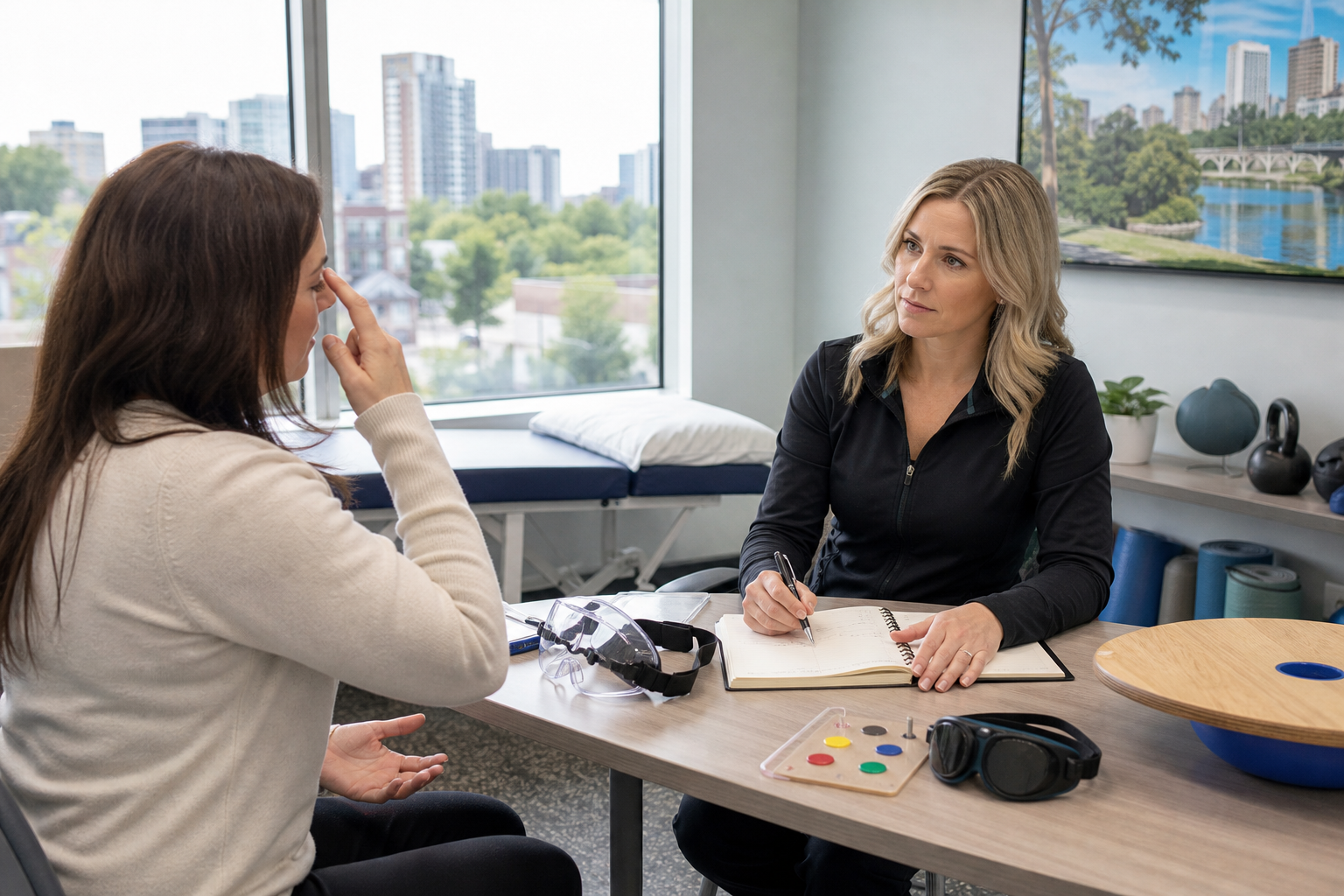
Dizziness and Vertigo Strategies: How to Match Symptoms With the Right Approach
There is no single strategy for every type of dizziness or vertigo. The most useful first step is to identify what the sensation feels like, what triggers it, how long it lasts, and how it affects walking, work, exercise, or daily activities. Those details help a qualified provider decide whether assessment-led vestibular rehabilitation, medical follow-up, or another type of care is appropriate.
Start With the Symptom Pattern, Not a Favourite Exercise
People often use “dizzy” to describe several different experiences. Vertigo usually means a false sensation of movement, such as spinning or the room shifting. Dizziness may feel more like light-headedness, floating, or difficulty orienting yourself. Imbalance refers to unsteadiness when standing or walking, while motion sensitivity may appear in busy visual environments, vehicles, or during head movement.
These experiences can overlap, and the same person may have more than one pattern. Choosing an exercise from a search result before understanding the cause can therefore be frustrating or inappropriate. An assessment should consider your symptoms, health context, triggers, functional limitations, and goals.
| Pattern to describe | What you may notice | Useful details to report | Assessment focus to discuss |
|---|---|---|---|
| Positional spinning | Brief spinning when rolling in bed, lying down, sitting up, or turning your head | Which position triggers it, how long the episode lasts, and whether it repeats | Whether positional testing and an appropriate BPPV strategy should be considered |
| General dizziness | Light-headedness, floating, disorientation, or feeling “off” | Onset, frequency, standing or walking triggers, and associated symptoms | Medical context and whether vestibular rehabilitation is suitable |
| Imbalance | Unsteadiness, veering, difficulty turning, or reduced confidence on stairs | Falls, near-falls, uneven surfaces, and activities you avoid | Balance, gait, mobility, and safety-related function |
| Motion or visual sensitivity | Symptoms in stores, crowds, traffic, screens, or during head movement | Visual environments, movement speed, and how quickly symptoms settle | Gaze, habituation, graded exposure, and balance strategies |
| Post-concussion symptoms | Dizziness with headache, fatigue, visual difficulty, or reduced activity tolerance after head impact | Injury history, medical assessment, school or work demands, and activity response | Coordination with medical care and individualized concussion rehabilitation |
For persistent dizziness, vertigo, or imbalance, vestibular rehabilitation can help identify which strategies fit your symptoms and daily goals. It should be an individualized process, not a universal routine.
Dizziness and Vertigo Strategies That May Be Considered

Once the presentation is understood, a provider may consider several types of intervention. The right combination depends on the assessment and may change as your tolerance and function improve.
Canalith repositioning for appropriate positional vertigo
Some positional vertigo presentations may involve displaced particles in the inner ear. When assessment supports that pattern, a canalith repositioning manoeuvre may be considered. It is not appropriate for every type of dizziness or vertigo, and repeating a manoeuvre without knowing which side, canal, or condition is involved may be a poor fit.
Gaze-stabilization work
Gaze-stabilization exercises are designed for situations where vision becomes difficult to maintain during head movement or where movement causes visual blurring or disorientation. A provider may adjust the speed, position, background, duration, and amount of head movement based on your response.
Habituation and motion-sensitivity exercises
When ordinary movements or visually complex environments repeatedly provoke symptoms, carefully graded exposure may be discussed. The purpose is not to force yourself through severe symptoms. A provider may instead help you practise manageable movements and gradually build tolerance.
Balance and gait training
Balance strategies may include standing, walking, turning, changing surfaces, moving the head while walking, or managing visually busy environments. Exercises should connect to a practical goal, such as walking confidently outdoors, navigating work, using stairs, or returning to exercise.
Individualized home exercises
Home guidance can carry treatment into daily life, but it should reflect your assessment and current tolerance. A useful plan explains what to do, how often to practise, what response is expected, when to modify the activity, and how progress will be reviewed.
The clinic’s discussion of canalith repositioning, gaze training, and balance exercises illustrates why these approaches belong to different parts of an assessment-led plan.
When Symptoms Happen With Bed Turns or Head Position Changes
Spinning that begins when you roll over, lie down, sit up, or look in a particular direction is a pattern worth describing clearly. It may prompt a provider to assess for BPPV, but positional spinning is not enough to diagnose it. Other conditions can produce dizziness with movement, and some people have additional symptoms that need separate consideration.
Before trying an internet manoeuvre, note the exact movement that triggers the episode, whether the sensation is spinning or light-headedness, how long it lasts, and whether you feel unwell afterward. An assessment can help determine whether repositioning is appropriate or whether gaze, balance, habituation, medical, or other support should be considered.
When Unsteadiness or Motion Sensitivity Is the Main Problem
If your main difficulty is walking steadily, turning, standing on uneven ground, or moving through busy environments, ask which activities are limited and what happens when you attempt them. A provider may look at balance, gait, head movement, visual input, turning, and the way symptoms change across different environments.
Treatment may combine balance and gait training, gaze work, graded exposure, and home practice. Progress can be connected to meaningful tasks, such as completing a shopping trip, walking outside, returning to work, or exercising with more confidence.
When Dizziness Begins After a Head Impact
Dizziness after a head impact may occur alongside headaches, visual sensitivity, fatigue, neck-related symptoms, balance problems, or reduced tolerance for physical and mental activity. Rehabilitation is not a substitute for medical assessment, diagnosis, or clearance.
When appropriate, concussion rehabilitation may consider vestibular symptoms, visual demands, activity tolerance, and return-to-school, work, sport, or daily-life goals. Communication with appropriate medical professionals matters, particularly when symptoms are changing or the injury has not yet been assessed.
What to Track Before an Assessment
A short symptom record can make your first appointment more productive. You do not need to diagnose yourself. Simply record what happens and how it affects your life.
- Sensation: Describe spinning, light-headedness, floating, visual blurring, nausea, or unsteadiness.
- Onset: Note when it began and whether it followed an illness, injury, medication change, or head impact.
- Duration and frequency: Record how long episodes last and how often they occur.
- Triggers: Include bed turns, standing, walking, head movement, screens, crowds, vehicles, exercise, or particular positions.
- Associated symptoms: Note headache, hearing changes, ringing, nausea, fatigue, neck discomfort, visual symptoms, or unusual weakness.
- Safety and function: Record falls, near-falls, difficulty with stairs, driving, work, school, exercise, or household tasks.
- Goals: Write down the activity you most want to resume or perform more confidently.
Bring relevant medical information and a list of medications if available. The purpose is to give the provider a clearer picture of your experience, not to replace a clinical assessment.
When Dizziness Needs Medical Attention First
Physiotherapy is not emergency care. Seek prompt medical evaluation for sudden, severe, unusual, or rapidly worsening dizziness, symptoms after a significant injury, fainting, new neurological changes, chest pain, severe headache, or an inability to walk safely. Call emergency services for a life-threatening emergency, such as unconsciousness or a seizure.
If a concussion is suspected, arrange medical assessment rather than treating it as a routine injury. Rehabilitation may become part of recovery afterward, but it does not independently determine whether an injury is safe to ignore or provide medical clearance.
How to Choose Vestibular Rehabilitation
When contacting a provider, ask questions that reveal how the clinic approaches assessment and progression:
- How will you assess my dizziness, vertigo, suspected BPPV, or balance concerns?
- How will my symptoms and daily goals shape the treatment plan?
- What home guidance might be considered, and how will it be adjusted?
- How will you review progress and decide whether the plan should change?
- What should I do if an exercise increases my symptoms or does not fit my routine?
- How do you approach symptoms that overlap with concussion, neck, jaw, orthopedic, or mobility concerns?
- When would you recommend involving another healthcare professional?
- What are the fees, appointment format, scheduling options, and cancellation requirements?
Look for clear explanations and a plan connected to function, not just a list of techniques. One-on-one attention can be useful because it gives the provider time to understand the pattern, observe your response, and adjust guidance appropriately.
A Local Next Step in London, Ontario
Foundation Physiotherapy and Rehab provides one-on-one vestibular rehabilitation in London, Ontario, for dizziness, vertigo, BPPV, and balance concerns. The clinic is located at Unit 100, 540 Wharncliffe Road South, in the Larlyn Building between London Honda and Sun Life.
A complimentary 10 to 15 minute consultation gives prospective patients an opportunity to describe their symptoms, ask questions, and discuss whether an assessment is appropriate. It is a conversation, not a promise that one particular strategy will fit every presentation.
Frequently Asked Questions
Can dizziness and vertigo have the same treatment strategy?
Not necessarily. Dizziness and vertigo describe different sensations, and their causes can vary. One person may need positional assessment while another may need balance, gaze, motion-sensitivity, medical, or other support.
Should I try a canalith repositioning manoeuvre at home?
Ask a qualified provider first, particularly if you are unsure whether your symptoms are positional vertigo. Repositioning is not appropriate for every type of dizziness, and the correct approach depends on assessment.
How long should dizziness last before I seek vestibular rehabilitation?
There is no single waiting period that suits everyone. Seek medical attention promptly for sudden, severe, unusual, or worsening symptoms. For ongoing or activity-limiting symptoms, contacting a provider can help determine whether vestibular rehabilitation is suitable.
Can vestibular rehabilitation help with dizziness after a concussion?
It may be part of an individualized recovery plan when appropriate. Medical assessment comes first when a concussion is suspected, and rehabilitation does not replace diagnosis, medical follow-up, or clearance.
What should I bring or record before a dizziness assessment?
Bring a symptom and trigger record, relevant injury or illness history, medication information, and examples of activities that have become difficult. Include your main goal, such as walking outdoors, returning to work, or tolerating busy environments.
Match the Strategy to the Pattern
The most useful dizziness and vertigo strategies begin with understanding the symptom pattern rather than choosing an exercise at random. Positional spinning may prompt assessment for BPPV and possible repositioning, while imbalance, visual sensitivity, or post-concussion symptoms may call for different combinations of gaze, habituation, balance, gait, activity, and home-based strategies.
If symptoms are sudden or severe, seek medical attention first. If dizziness, vertigo, or imbalance persists or limits daily life, an individualized assessment can help clarify the next step. To discuss one-on-one vestibular rehabilitation and a complimentary 10 to 15 minute consultation in London, Ontario, contact Foundation Physiotherapy and Rehab.